


Mesh office chairs have quietly taken over modern workspaces.
Walk into a tech office — mesh.
Browse ergonomic recommendations — mesh.
Search “best chair for long hours” — almost always mesh.
But are mesh office chairs actually better?
Or are they just the new default?
If you sit for 6–10 hours a day, the answer isn’t just about breathability. It’s about structure, tension, durability, and how the chair feels at hour seven, not minute seven.
Let’s break it down properly.
What Is a Mesh Office Chair?
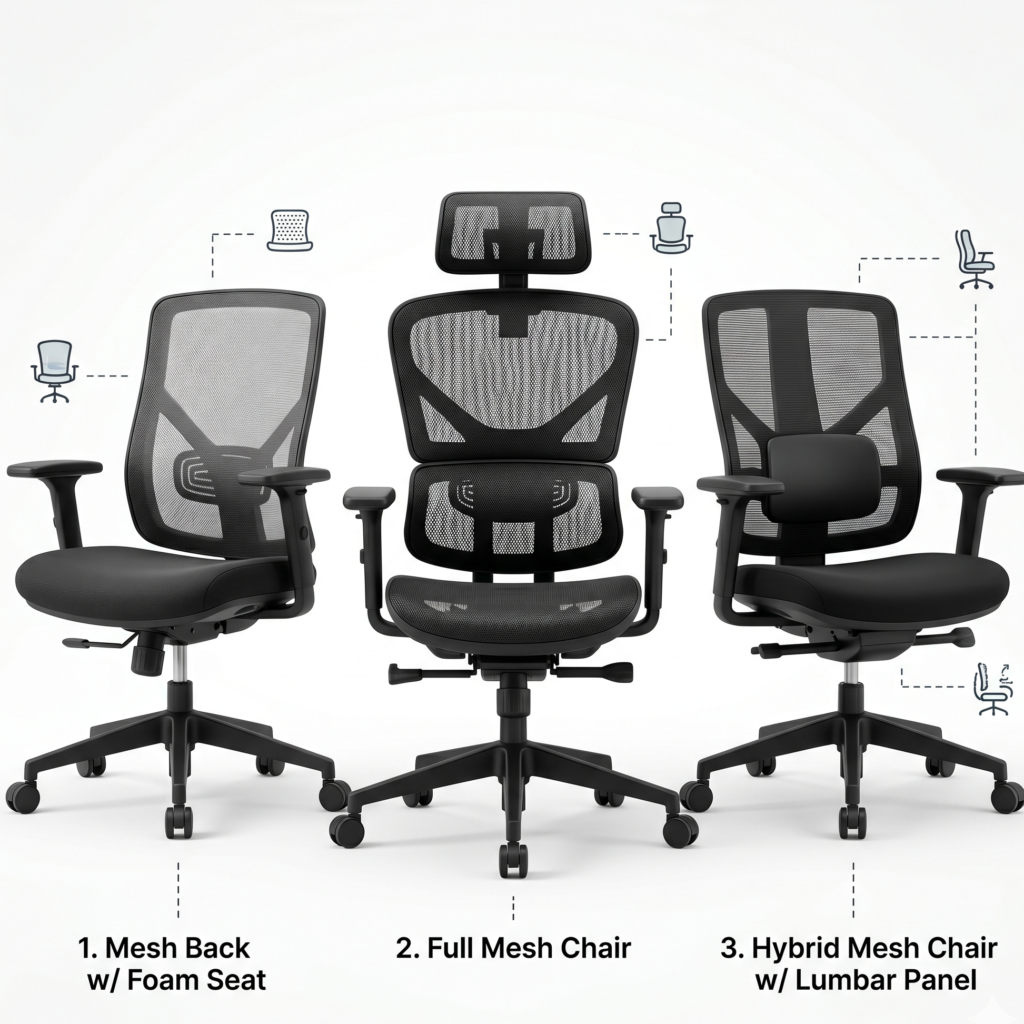
A mesh office chair replaces traditional foam padding (usually in the backrest, sometimes the seat) with a woven synthetic material stretched tightly across a frame.
You’ll typically see three designs:
- Mesh back + foam seat
- Full mesh (seat and back)
- Hybrid mesh with integrated lumbar panel
The idea is tension-based support rather than cushion-based comfort.
That difference matters more than most buyers realize.
The Pros of Mesh Office Chairs
Let’s start with where mesh genuinely performs well.
1️⃣ Excellent Breathability
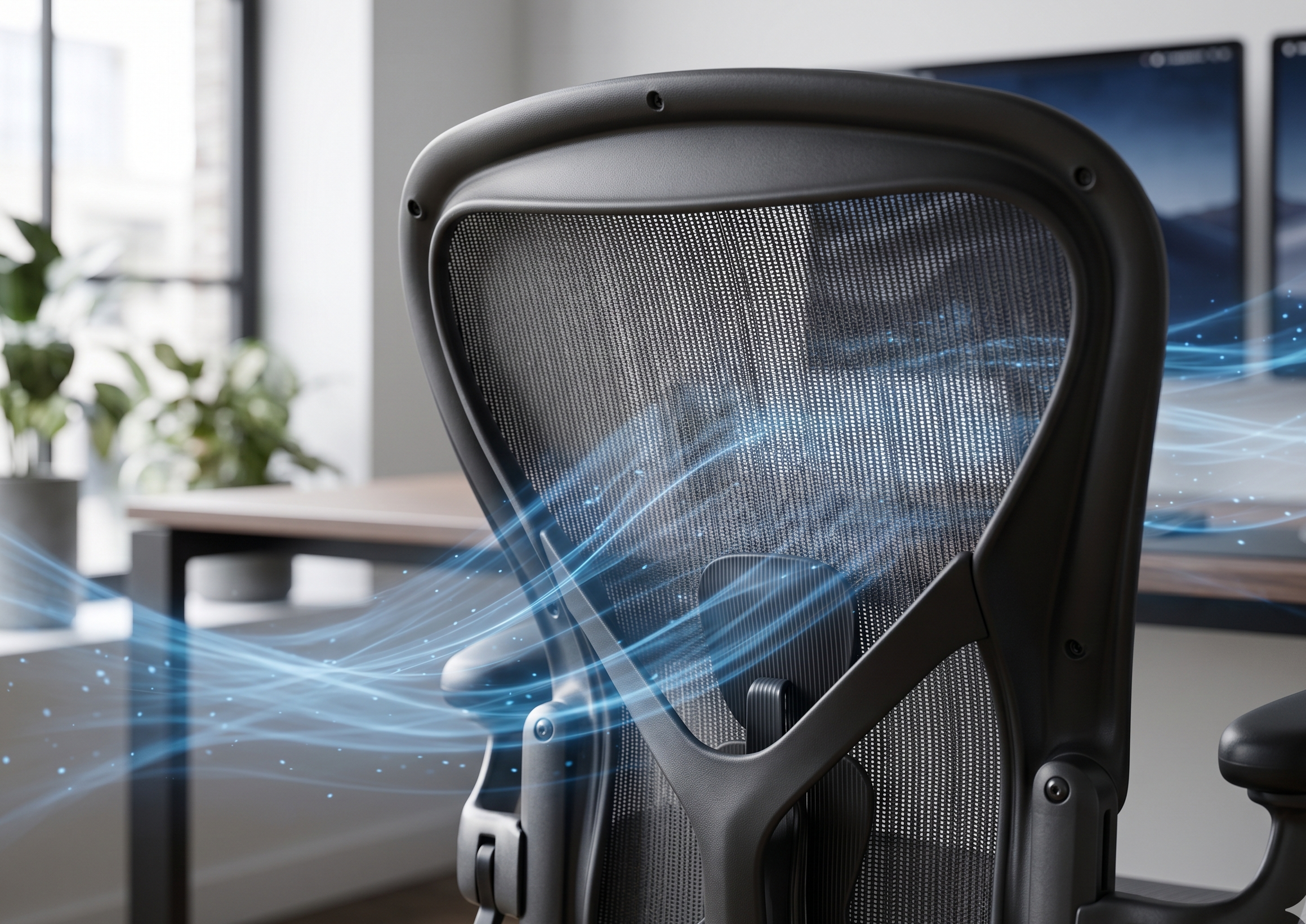
This is the headline advantage.
Mesh allows airflow between your body and the backrest. Over long sessions, that reduces heat buildup, especially in warmer climates or non-air-conditioned rooms.
The CDC notes that prolonged static sitting increases discomfort over time. When heat retention is added, fatigue increases faster.
By hour five, airflow becomes noticeable.
If you run warm while working, this is a meaningful advantage.
2️⃣ Consistent Tension Support
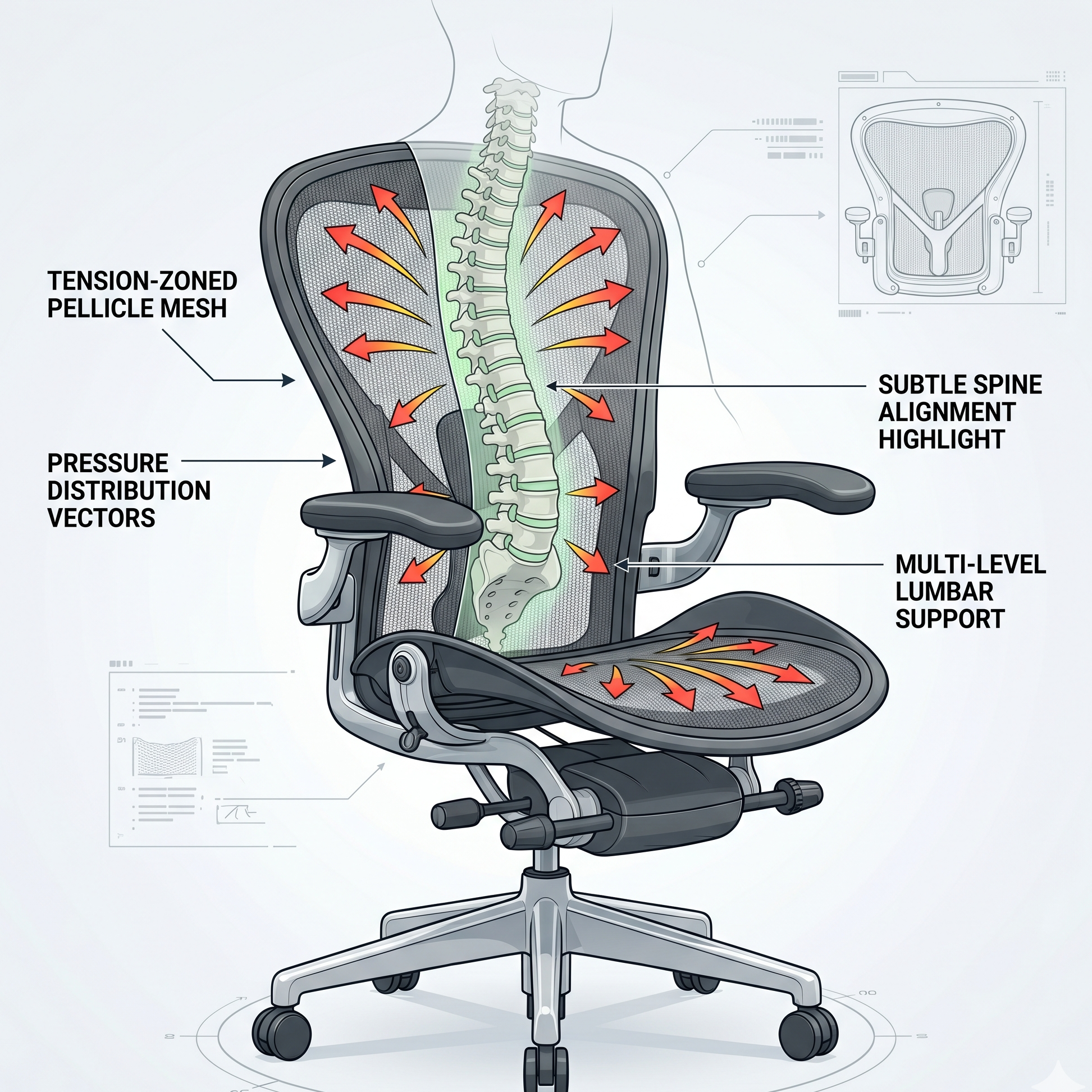
Unlike foam, mesh doesn’t "flatten" at least not high-quality mesh.
Premium mesh maintains even tension across your back. That reduces uneven pressure points and helps maintain spinal alignment.
Research indexed in PubMed shows that sustained pressure and poor posture contribute to musculoskeletal strain.
Tension-based systems distribute load differently than cushion-based systems. The feel is firmer but often more stable over long hours.
3️⃣ Lightweight & Modern Design
Mesh chairs tend to be:
- Lighter
- Easier to move
- Less visually bulky
- Better suited for standing desk setups
For home offices, this matters.
They don’t dominate the room like oversized executive chairs.
4️⃣ Lower Maintenance
Mesh doesn’t require conditioning like leather.
It won’t crack or peel.
Dust and debris can be vacuumed or wiped off easily.
For buyers who don’t want maintenance routines, this is a plus.
5️⃣ Often Paired with Strong Ergonomic Engineering
Many of the most ergonomically advanced chairs use mesh not because mesh is automatically superior, but because tension systems integrate well with adjustable lumbar structures.
OSHA emphasizes lumbar support and adjustability as critical for reducing musculoskeletal stress.
Mesh frequently appears in chairs designed around posture science.
But that’s not automatic.
The Cons of Mesh Office Chairs
Now let’s talk tradeoffs because there are some.
1️⃣ Firmer Feel (Less Plush)
Mesh doesn’t feel soft.
If you prefer sinking into a thick cushion, mesh may feel rigid at first.
Some users adjust quickly. Others never fully like the firmness.
It’s preference-dependent.
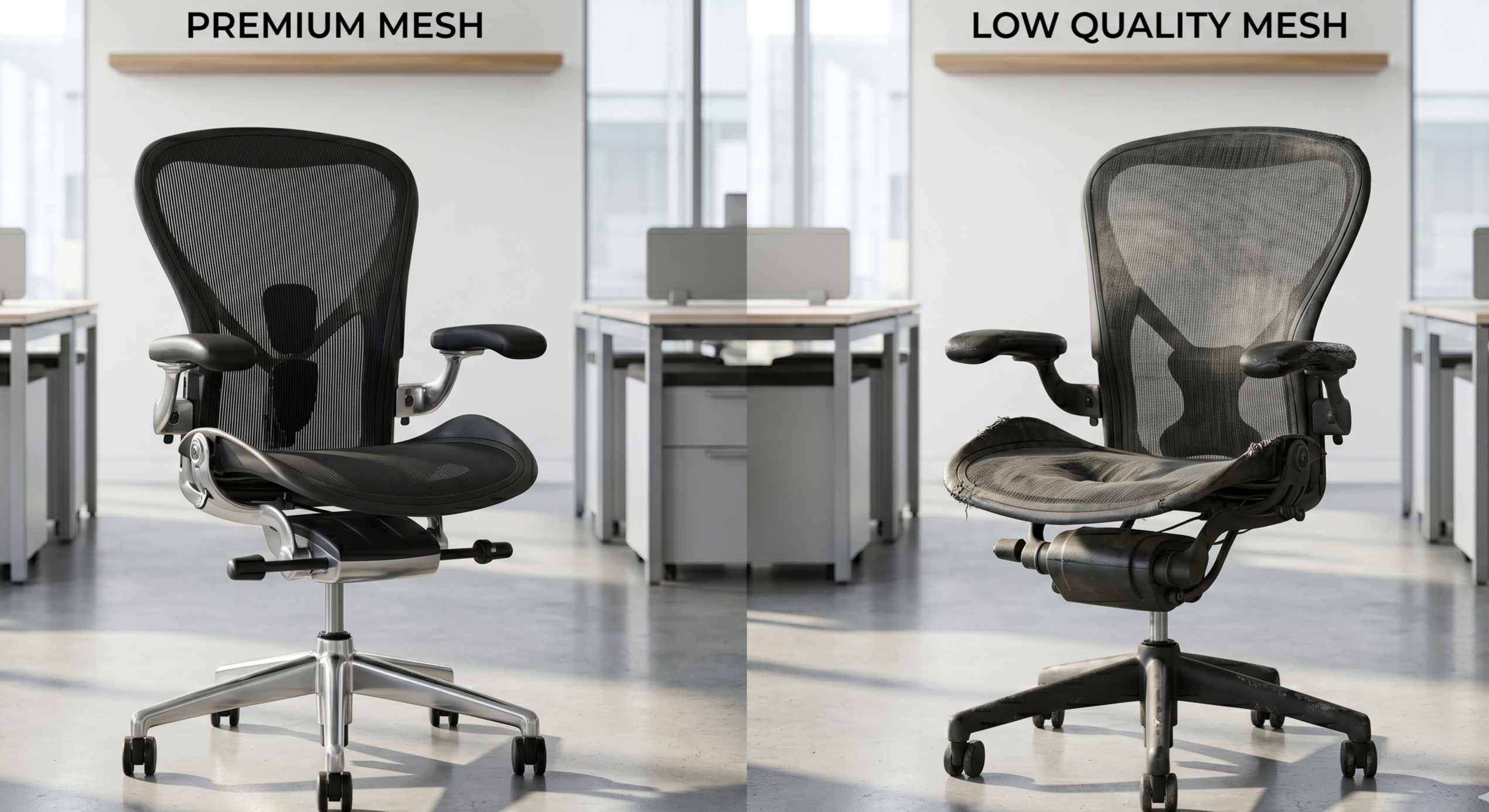
2️⃣ Cheap Mesh Can Sag
Not all mesh is engineered equally.
Lower-cost mesh may:
- Stretch unevenly
- Lose tension
- Sag after 1–2 years
Once sagging happens, lumbar support declines.
High-end models use reinforced mesh designed to hold tension long-term.
3️⃣ Less “Executive” Aesthetic
Mesh looks modern and task-oriented.
If you want a traditional executive appearance for a formal office, leather may project more authority visually.
This matters for some buyers, especially in client-facing environments.
4️⃣ Cooler Feel in Cold Climates
In colder regions (Canada, UK winters), mesh can feel cool when you first sit down.
It doesn’t retain warmth like leather or padded foam.
For most people, this is minor but noticeable.
5️⃣ Seat Comfort Depends on Design
Full-mesh seats distribute weight differently than foam seats.
Some people love the consistent tension.
Others prefer slight cushioning under the thighs.
If possible, test full mesh vs hybrid designs.
Real-World Examples of Quality Mesh Chairs
Below are examples of well-engineered mesh chairs that demonstrate what high-quality tension systems look like.
🔹 Herman Miller Aeron
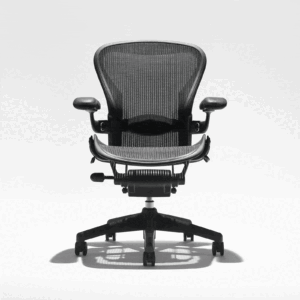
- Pellicle mesh seat and back
- Zoned lumbar support (PostureFit SL)
- Multiple size options
- Long-term durability reputation
Often considered a benchmark for tension-based design.
🔹 Steelcase Series 2
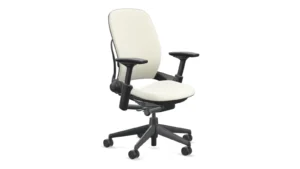
- Breathable mesh back
- Adjustable lumbar
- Smooth recline
- Mid-premium pricing
Balanced option for long daily use.
🔹 Branch Ergonomic Chair
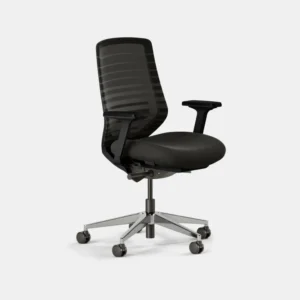
- Adjustable lumbar
- Mesh back + foam seat
- Accessible pricing
Strong example of mid-range mesh engineering.
Mesh Back vs Full Mesh: Important Distinction
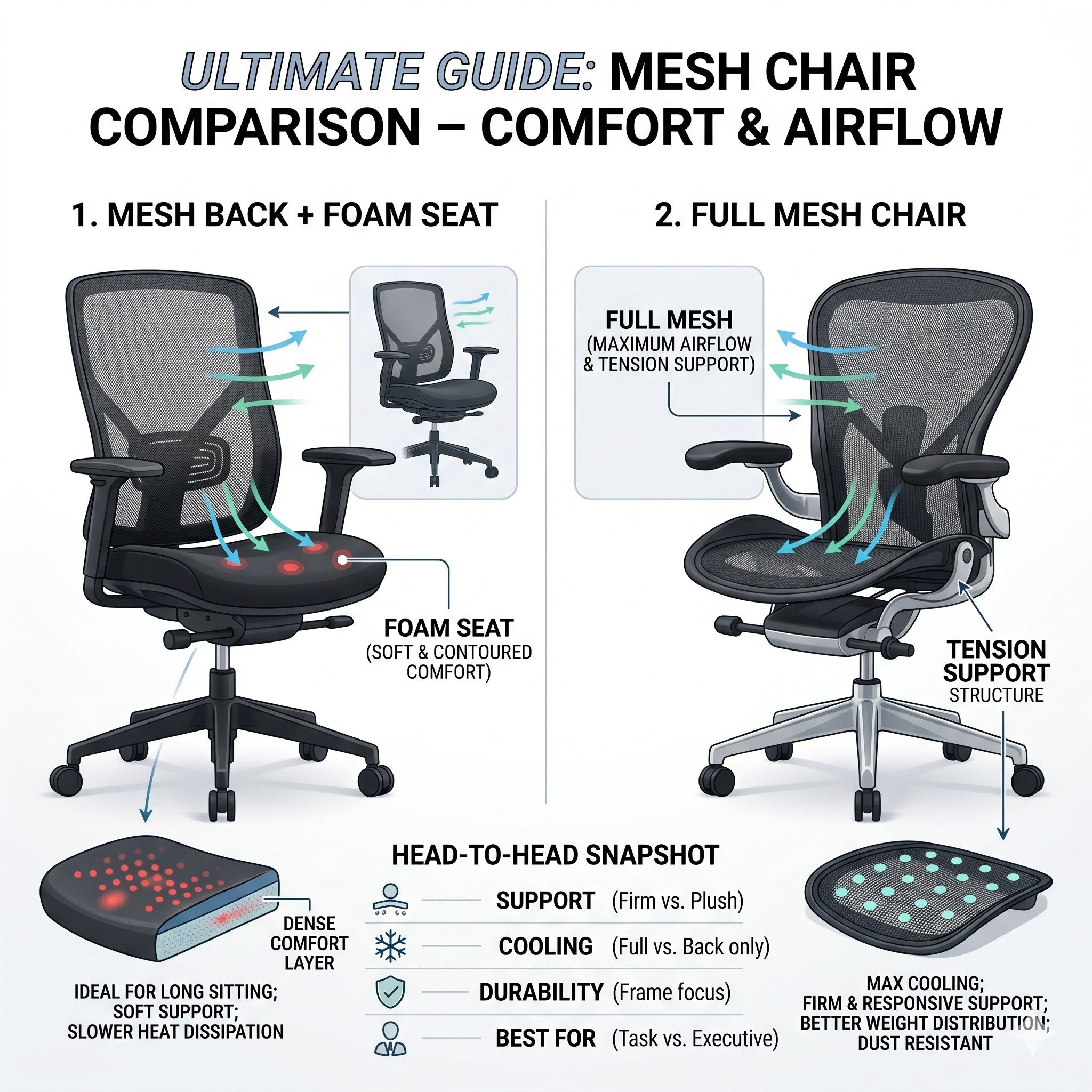
Mesh Back + Foam Seat
- Softer sitting experience
- Slightly less airflow
- Foam may compress over time
Full Mesh (Seat + Back)
- Maximum airflow
- No cushion flattening
- Firmer feel
If you sit 8+ hours daily and run warm, full mesh often performs better long-term.
Who Should Choose a Mesh Office Chair?
Mesh is typically a strong fit if:
☐ You sit 6–10 hours daily
☐ You work in a warm environment
☐ You prefer firm support
☐ You want low maintenance
☐ You use a standing desk frequently
Programmers, remote workers, and designers often prefer mesh for consistency.
Who Might Prefer Something Else?
You may prefer leather or padded chairs if:
☐ You prioritize plush comfort
☐ You work shorter sessions (under 4 hours)
☐ You want executive aesthetics
☐ You live in a colder climate
Material preference matters but structure matters more.
The 8-Hour Reality Test
Hour 1 → Firm but comfortable.
Hour 3 → Tension support noticeable.
Hour 5 → Breathability advantage becomes clear.
Hour 7 → Cheap mesh reveals sag; premium mesh holds firm.
High-quality mesh shines late in the day.
What Most Buyers Get Wrong
They assume mesh automatically equals ergonomic.
It doesn’t.
NIOSH emphasizes workstation adjustability as a key factor in preventing musculoskeletal strain.
Lumbar support.
Seat depth adjustment.
Recline tension.
Those determine long-term comfort not material alone.
Final Verdict
Mesh office chairs offer:
- Superior airflow
- Consistent tension support
- Modern aesthetics
- Low maintenance
But they:
- Feel firmer
- Depend heavily on build quality
- Don’t provide plush cushioning
If you work long hours and prioritize structure over softness, mesh is often the safer long-term choice.
If you prefer plush seating and executive style, padded or leather chairs may suit you better provided adjustability is strong.
Material matters.
Engineering matters more.
FAQ
Are mesh office chairs good for long hours?
Yes, high-quality mesh chairs can provide consistent support and airflow during extended work sessions.
Do mesh chairs sag over time?
Low-quality mesh may sag. Premium mesh chairs are designed to maintain tension for years.
Is mesh better than leather?
Mesh offers better breathability, while leather offers a softer, executive feel. Ergonomic adjustability matters more than material.Are mesh chairs good for back pain?
They can be, provided they include proper adjustable lumbar support and seat depth control.