


Leather office chairs have a certain presence.
They look established. Executive. Confident.
But once the meeting ends and you’re still sitting there at hour six… appearance stops mattering.
Comfort does.
If you’re considering a leather office chair, especially for long workdays. It's important to look past the aesthetics and understand how leather actually performs over time.
Let’s break it down honestly about leather office chair pros and cons.
What Is a Leather Office Chair?
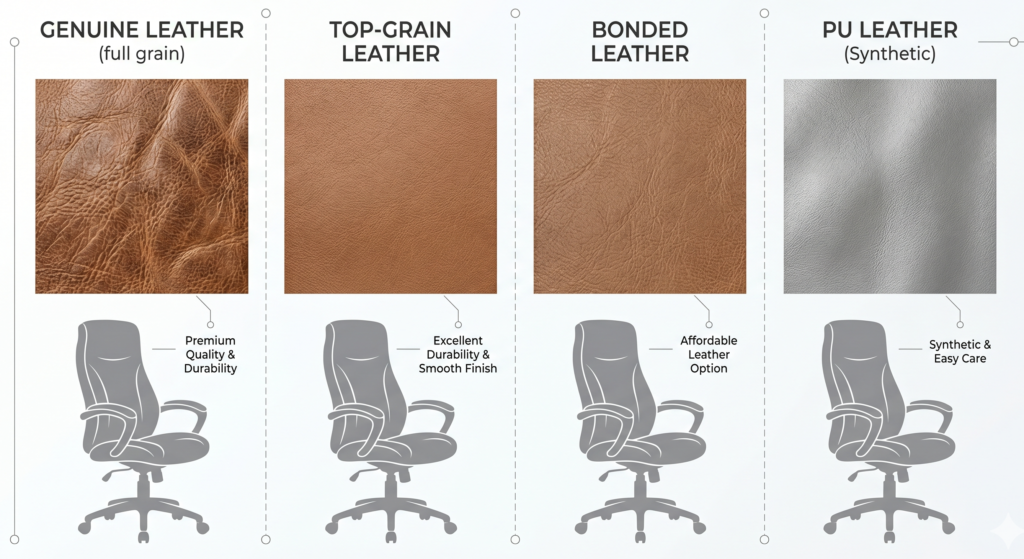
A leather office chair typically uses:
- Genuine leather
- Top-grain leather
- Bonded leather
- PU (faux leather)
Leather is usually paired with foam cushioning rather than mesh tension systems.
That means comfort depends heavily on:
- Cushion density
- Lumbar engineering
- Frame structure
- Recline mechanism
Material alone does not determine ergonomics.
The Pros of Leather Office Chairs
Let’s start with where leather genuinely performs well.
1️⃣ Executive Aesthetic & Professional Presence
Leather projects authority.
In formal office settings, client-facing roles, or executive environments, leather chairs often align better visually than mesh.
For some buyers, this matters.
It’s not about ergonomics, it’s about presentation.
2️⃣ Softer Initial Feel
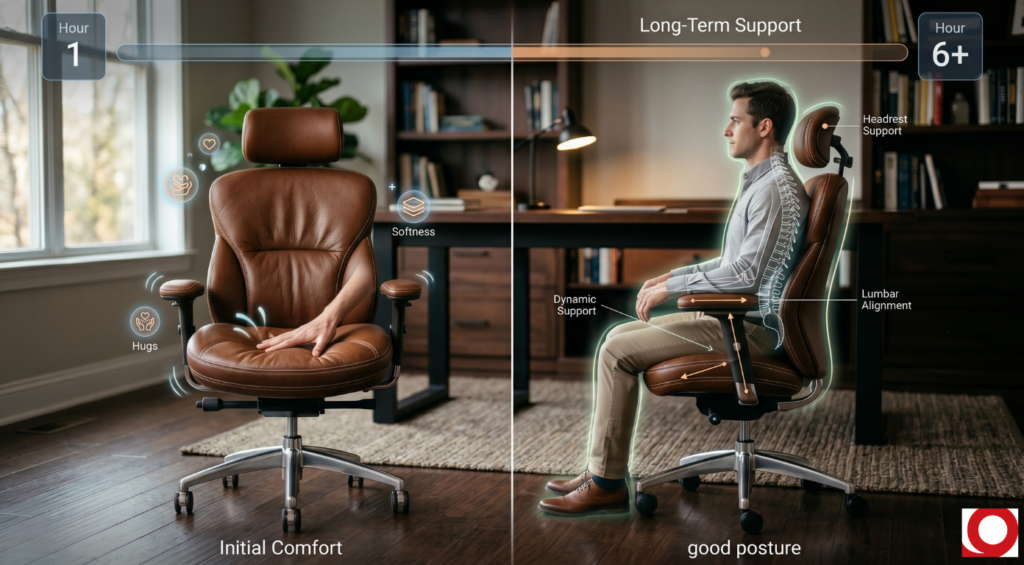
Leather chairs typically use thicker foam padding.
That gives them:
- A plush first impression
- A softer seat surface
- A more cushioned feel
If you prefer sinking slightly into your seat rather than sitting on tensioned mesh, leather can feel more comfortable at first.
But initial comfort isn’t long-term comfort.
We’ll get to that.
3️⃣ Durability (When It’s High-Quality Leather)
Genuine leather, when properly maintained:
- Resists tearing
- Holds up well over years
- Develops a patina rather than peeling
Bonded leather and PU are different stories (more on that below).
4️⃣ Warmer Feel in Cooler Climates
Leather retains heat better than mesh.
In cooler environments (UK winters, Canadian offices, colder U.S. states), leather may feel more comfortable year-round.
Mesh can feel cool initially.
Leather feels insulated.
5️⃣ Often Paired with High-End Ergonomic Frames
Many premium ergonomic chairs offer leather upgrades.
For example:
🔹 Steelcase Leap (Leather Option)
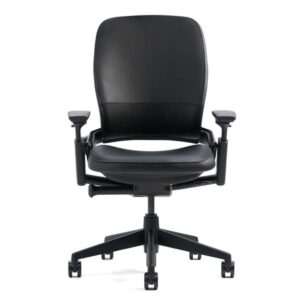
- Adjustable lumbar height & depth
- Seat depth adjustment
- Dynamic back support
- Leather upholstery option
The structure here is ergonomic first — leather second.
🔹 Herman Miller Embody (Leather Upgrade Available)
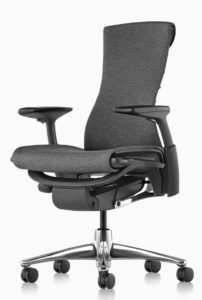
- Adaptive spinal support system
- Advanced recline mechanics
- Leather finish option
These chairs demonstrate that leather can absolutely work when paired with strong ergonomic engineering.
The Cons of Leather Office Chairs
Now for the tradeoffs, and they matter.
1️⃣ Heat Retention During Long Sessions

Leather traps heat.
During extended sitting (6–8+ hours), this can become noticeable especially in warmer climates or poorly ventilated rooms.
The CDC notes that prolonged sitting already contributes to discomfort and fatigue.
When heat buildup is added, fatigue can increase faster.
If you run warm while working, this is important.
2️⃣ Cushion Compression Over Time
Foam padding compresses.
Even high-density foam softens over years.
When compression occurs:
- Lumbar positioning changes
- Pelvic tilt shifts
- Lower back support declines
Research indexed in PubMed consistently shows that poor sustained posture contributes to musculoskeletal strain.
Flattened cushions subtly alter spinal mechanics.
Mesh doesn’t compress the same way.
3️⃣ Maintenance Requirements
Genuine leather requires:
- Conditioning
- Occasional cleaning
- Protection from drying/cracking
Bonded leather may peel.
PU may crack over time.
If you prefer “set it and forget it,” leather requires more attention than mesh.
4️⃣ Weight & Bulk
Leather executive chairs tend to be:
- Heavier
- Bulkier
- Harder to move
For small home offices, this can feel overwhelming visually.
5️⃣ Not Automatically Ergonomic
Many executive leather chairs prioritize:
- Thick padding
- High backs
- Visual presence
But lack:
- Adjustable lumbar
- Seat depth adjustment
- Proper recline tension
OSHA emphasizes that adjustability and neutral posture alignment are core ergonomic requirements.
A leather chair without adjustability isn’t ergonomic, it’s decorative.
Genuine vs Bonded vs PU Leather
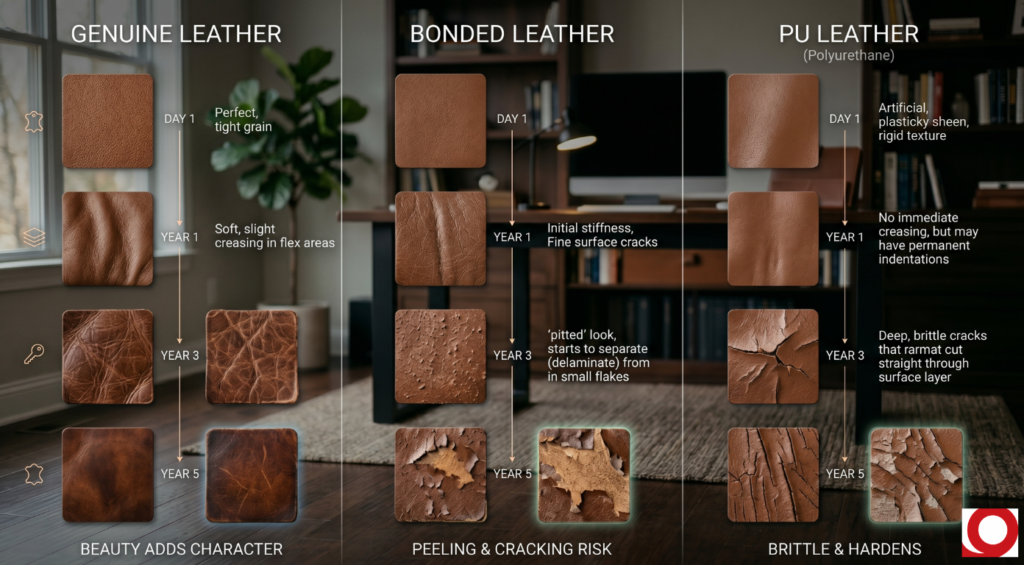
This matters more than most buyers realize.
Genuine Leather
- Most durable
- Requires conditioning
- Higher cost
- Develops patina
Bonded Leather
- Lower cost
- More prone to peeling
- Shorter lifespan
PU (Faux Leather)
- Easy to clean
- May crack over time
- Budget-friendly
If you’re buying for long-term use, genuine leather is usually the safer investment.
Real-World Example: Mid-Range Leather Ergonomic Option
🔹 Branch Verve Chair (Leather Version)
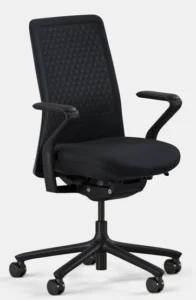
- Adjustable lumbar
- Sleek executive look
- Mid-range pricing
- Balanced cushioning
Demonstrates how leather can be paired with modern ergonomic engineering without extreme pricing.
The 8-Hour Reality Check
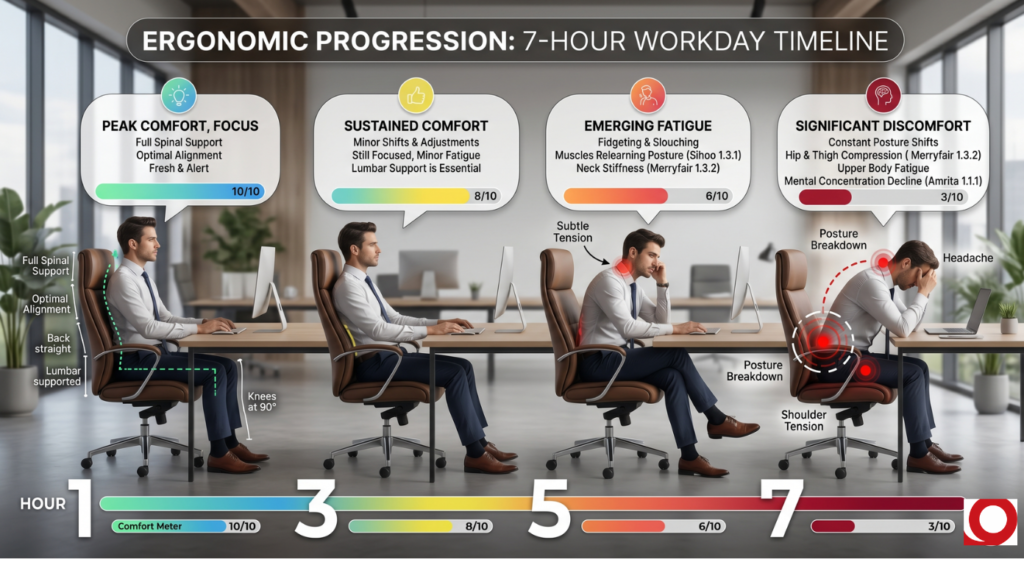
Hour 1 → Plush, comfortable, impressive.
Hour 3 → Cushion feel remains soft.
Hour 5 → Heat buildup may begin.
Hour 7 → Lumbar adjustability determines comfort.
Cheap leather chairs often fail at hour six.
Premium ergonomic leather chairs hold up because structure supports posture.
Material alone does not.
Who Should Choose a Leather Office Chair?
Leather is often a strong fit if:
☐ You value executive aesthetics
☐ You work in a cooler environment
☐ You sit 4–8 hours daily
☐ You prefer softer cushioning
☐ You’re willing to maintain leather
Who Might Prefer Mesh Instead?
Mesh may outperform leather if:
☐ You sit 8–10 hours daily
☐ You run warm while working
☐ You want maximum airflow
☐ You prefer firmer support
☐ You want minimal maintenance
It’s not about which is better.
It’s about which matches your workday.
What Most Buyers Get Wrong
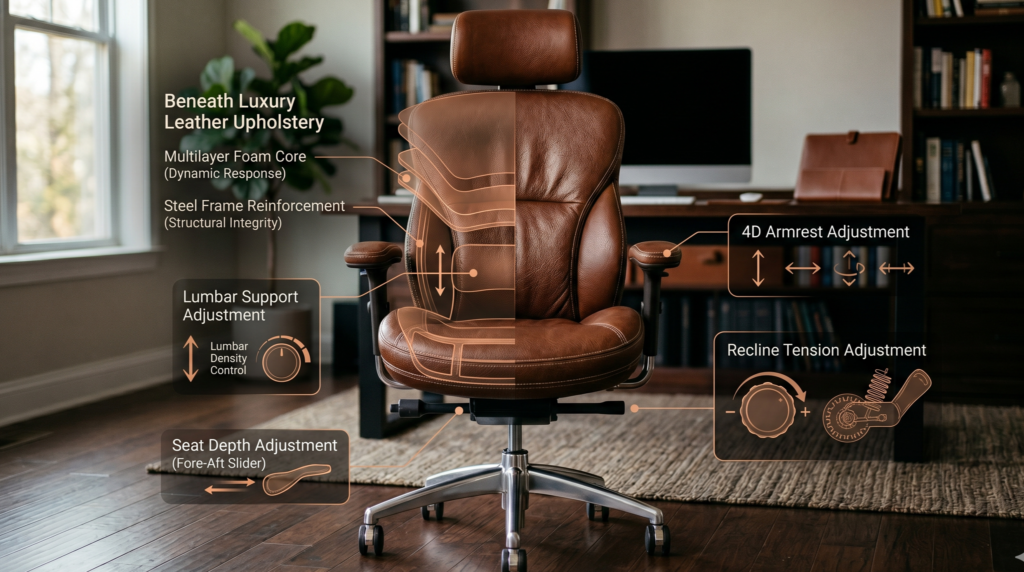
They choose material before checking adjustability.
NIOSH emphasizes that workstation adjustability reduces musculoskeletal strain.
Seat depth.
Lumbar tension.
Recline mechanics.
Those determine long-term comfort.
Leather is the surface.
Ergonomics is the structure underneath.
Final Verdict
Leather office chairs offer:
- Executive presence
- Softer feel
- Warmer seating
- Strong durability (if genuine leather)
But they:
- Retain heat
- Require maintenance
- Depend heavily on foam quality
- Are not automatically ergonomic
If you prioritize appearance and moderate-to-long daily use in cooler environments, leather can work beautifully provided the chair is adjustable.
If breathability and airflow matter more, mesh may be safer for extended sessions.
Structure first.
Material second.
FAQ
Are leather office chairs good for long hours?
They can be, provided they include adjustable lumbar support, seat depth control, and recline mechanisms.
Does leather make you sweat in office chairs?
Leather can retain heat during long sessions, especially in warm climates or poorly ventilated spaces.
Is genuine leather better than bonded leather?
Yes. Genuine leather is typically more durable and less prone to peeling.Are executive leather chairs ergonomic?
Some are, but many prioritize aesthetics over adjustability. Always verify ergonomic features.