


Standing desks are everywhere.
Productivity influencers swear by them.
Office tours feature them.
Remote workers often assume they’re the next “must-have” upgrade.
But here’s the honest question:
Are standing desks overrated or just well-marketed?
If you work remotely 6–10 hours a day, this isn’t about trends.
It’s about sustainability.
Let’s break this down realistically.
The Core Problem: Sitting Too Long
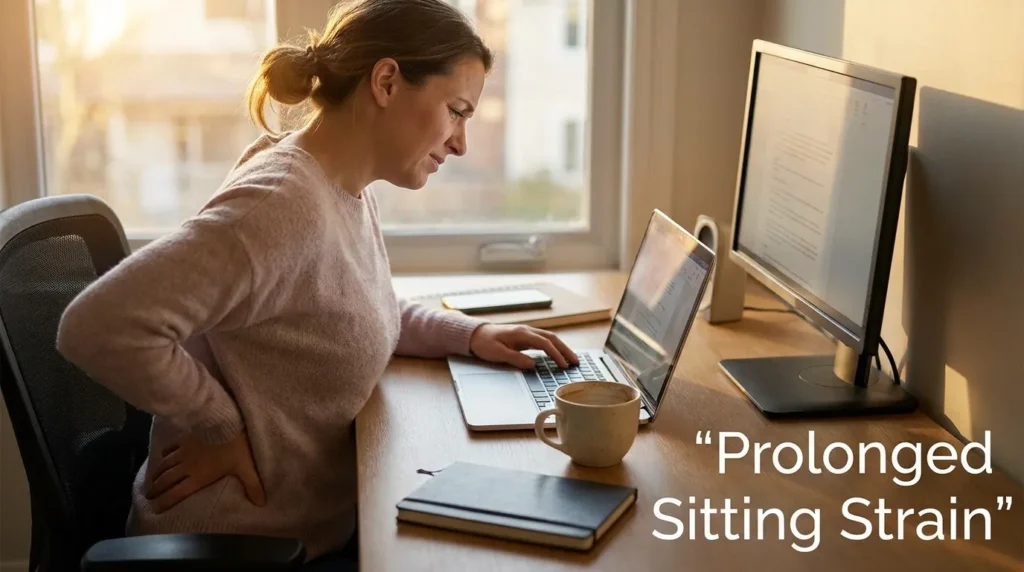
The push for standing desks didn’t appear randomly.
It came from concerns about prolonged static sitting.
The CDC explains that extended static posture especially in poorly aligned workstations, contributes to musculoskeletal strain.
But here’s the nuance:
It’s prolonged static posture.
That distinction matters.
Standing All Day Isn’t the Solution Either
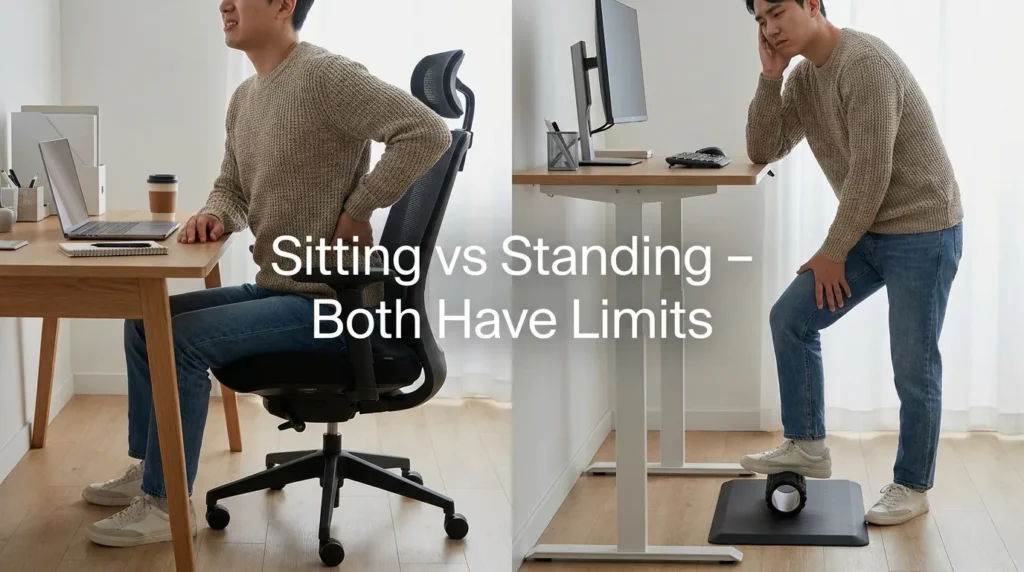
Many remote workers assume:
Sitting bad → Standing good.
Not exactly.
The NIH notes that musculoskeletal fatigue can also occur from prolonged standing without movement.
Standing statically for hours can lead to:
- Lower back compression
- Leg fatigue
- Foot discomfort
- Hip tightness
So if someone buys a standing desk and stands all day?
That’s not ergonomic progress.
It’s just a posture swap.
What Standing Desks Actually Do Well
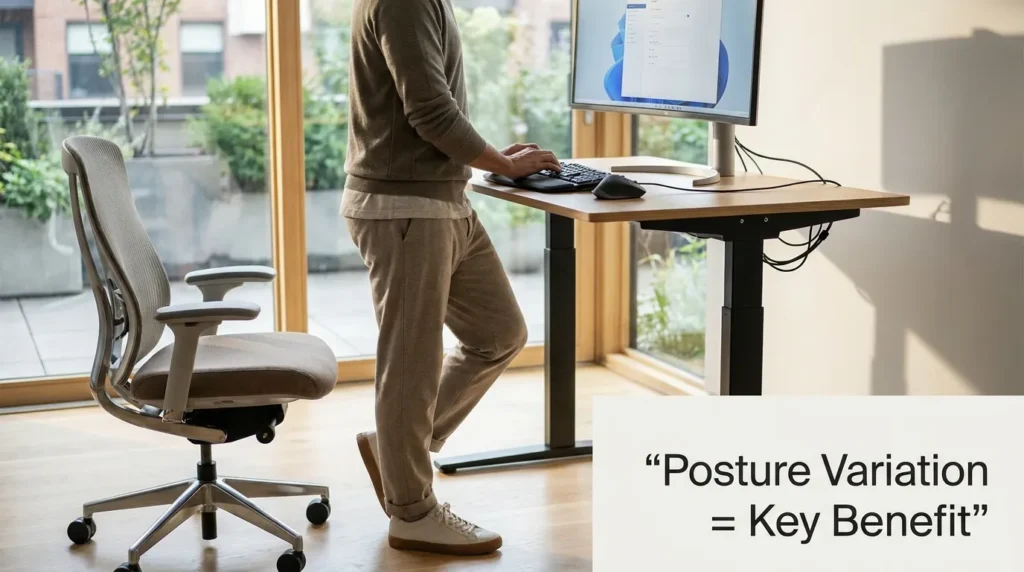
Standing desks allow posture variation.
And posture variation is powerful.
The UK Health and Safety Executive (HSE) emphasizes the importance of alternating working positions to reduce strain.
When used properly, standing desks:
- Encourage movement
- Reduce continuous spinal compression
- Break up long seated sessions
- Increase body awareness
When Standing Desks Feel Overrated
For some remote workers, standing desks feel underwhelming because:
- They expected instant pain relief
- They didn’t fix monitor height
- Their keyboard remained too high
- They stood too long too quickly
- Their chair was the real issue
A poorly aligned workstation doesn’t become ergonomic just because it moves vertically.
If your chair lacks lumbar support, a standing desk won’t fix that.
Full Standing Desk vs Overhyped Expectation
Let’s look at a realistic example.
Uplift V3 Standing Desk
It’s stable.
It adjusts smoothly.
It supports real sit-stand workflows.
But if you:
- Never change positions
- Keep your monitor too low
- Keep your shoulders elevated
It won’t magically eliminate discomfort.
Equipment supports behavior.
It doesn’t replace it.
Remote Worker Reality: What Actually Changes
From experience, here’s what usually happens after installing a standing desk:
Week 1:
You stand more than necessary because it’s new.
Week 2:
You settle into a rhythm.
Week 4:
You alternate naturally without thinking about it.
The benefit isn’t standing.
It’s the transition.
What Research Suggests (Without Hype)
Mayo Clinic explains that proper workstation alignment—including chair height, monitor positioning, and keyboard alignment is foundational for reducing strain.
Standing desks contribute to alignment flexibility.
They do not replace:
- Proper chair support
- Neutral wrist positioning
- Correct monitor height
They’re part of a system.
Who Actually Benefits Most
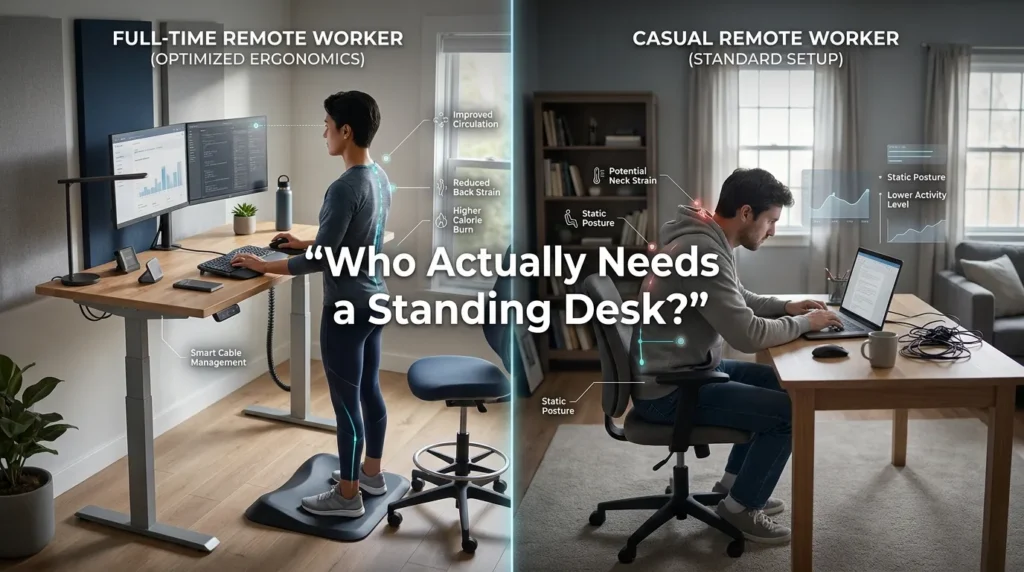
Standing desks make the biggest difference for remote workers who:
- Sit 8+ hours daily
- Feel lower back compression by afternoon
- Struggle to remember movement breaks
- Have already optimized chair and monitor setup
They’re less impactful if:
- You work 3–4 hours per day
- You already move frequently
- Your discomfort stems from wrist strain instead
In those cases, a vertical mouse or ergonomic keyboard may have greater impact.
Example: Where Budget Is Better Spent
If you’re deciding between:
- A $1,000 standing desk
- Or upgrading from a non-adjustable chair
Upgrade the chair first.
For example:
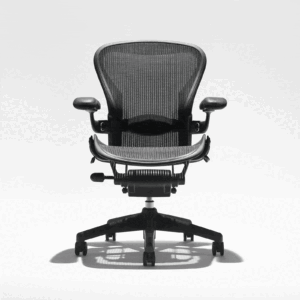
Herman Miller Aeron
Proper lumbar support influences every minute you sit.
Standing desks enhance movement.
Chairs define structure.
Structure comes first.
The Real Answer: Overrated or Misunderstood?
Standing desks aren’t overrated.
They’re often misunderstood.
They are:
✔ Effective for posture variation
✔ Useful for long-hour remote workers
✔ Valuable in permanent setups
They are not:
✘ Magic pain cures
✘ Necessary for everyone
✘ Replacements for proper chair ergonomics
Context matters.
The 4 PM Test
Ask yourself:
At 4 PM, do you feel better after standing briefly?
If yes, you likely benefit from adjustable height options.
If standing feels tiring quickly, your alignment may need correction.
The device is neutral.
Usage determines value.
A Balanced Remote Workflow
A sustainable rhythm looks like:
- Sit 60–90 minutes
- Stand 15–30 minutes
- Repeat
- Move briefly between transitions
It’s not dramatic.
It’s consistent.
That’s what creates comfort over months.
Final Verdict
Are standing desks overrated?
No.
Are they essential for every remote worker?
Also no.
They are tools for posture variation most beneficial when:
- You work full-time remotely
- Your base alignment is already optimized
- You use them strategically
Ergonomics isn’t about trends.
It’s about sustainable habits.
FAQ
Are standing desks actually worth it?
They can be, particularly for full-time remote workers who benefit from posture variation throughout the day.
Do standing desks fix back pain?
They support movement and alignment flexibility, but proper chair support and workstation setup are equally important.
How long should you stand at a standing desk?
15–30 minutes after 60–90 minutes of sitting is generally sustainable.Can standing too long cause problems?
Yes. Prolonged static standing may cause fatigue if not alternated with sitting.