


First Impression: Softer, More Forgiving
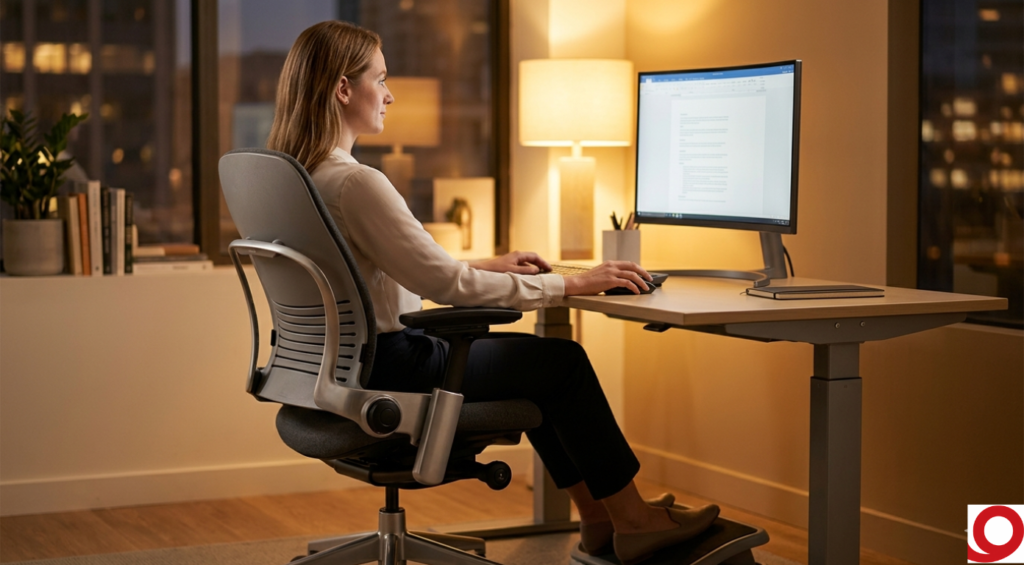
The first thing you notice about the Leap is the seat.
It’s cushioned.
Not overly plush, but noticeably softer than mesh-based designs.
If you’re coming from a rigid chair, it feels welcoming.

The backrest flexes slightly when you move not dramatically, just enough to feel responsive.
It’s subtle, but over time that subtlety matters.
Long-Hour Comfort: The Real Test
Premium chairs shouldn’t just feel good for 20 minutes.
They should feel stable at 3:45 PM.
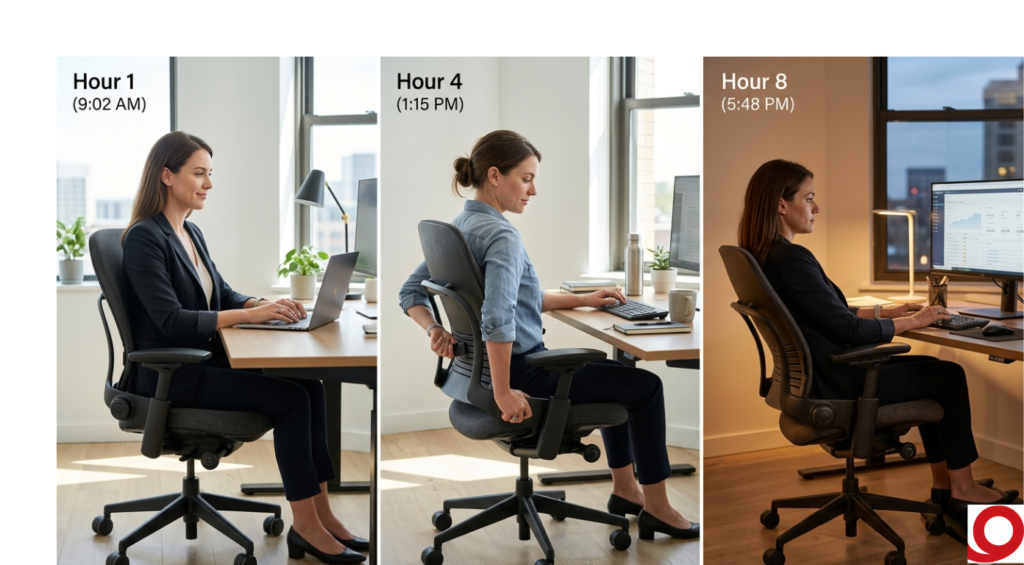
Hour 1
Comfortable. Supportive. Balanced.
Nothing extreme which is actually a good sign.
Hour 4
The adjustable lumbar becomes valuable.
You may find yourself tweaking the lumbar depth slightly.
The cushioning still feels supportive without collapsing.
Hour 8
This is where the Leap’s adaptive back design shows its strength.
The backrest flexes gently as you shift positions. You don’t feel locked upright.
The CDC notes that prolonged static posture contributes to discomfort during extended sitting (source:https://www.cdc.gov/physicalactivity/basics/index.htm).
The Leap encourages subtle movement without feeling unstable.
It’s not dramatic motion. It’s controlled flexibility.
Lumbar Support: Highly Adjustable
One of the Leap’s defining features is lumbar adjustability.
You can modify:
- Lumbar height
- Lumbar depth
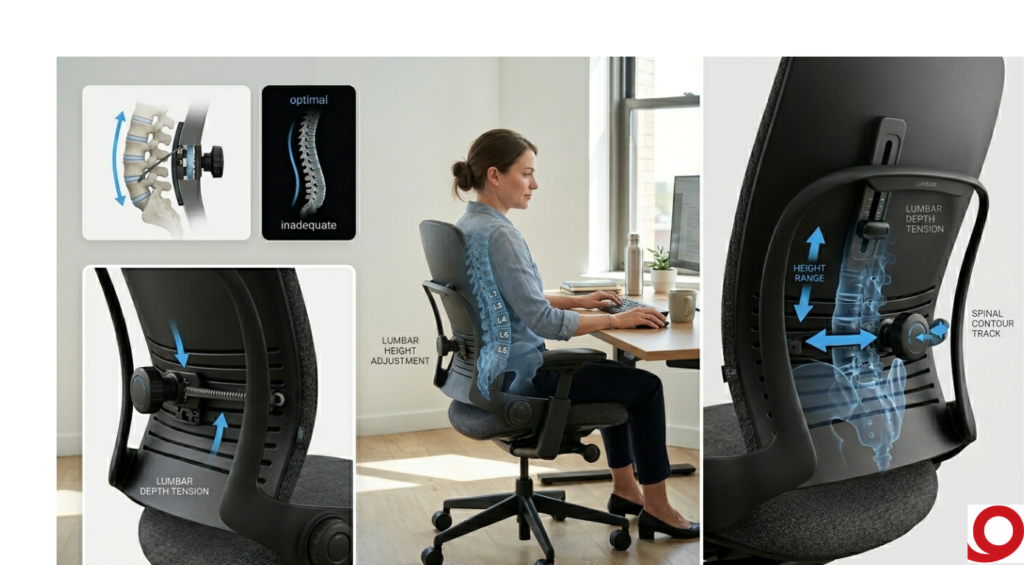
This allows you to increase or decrease pressure against your lower back.
OSHA emphasizes that proper workstation seating should support neutral spine posture and reduce musculoskeletal strain (source:https://www.osha.gov/etools/computer-workstations).
The Leap gives you control over how that support feels.
If you’ve ever felt like lumbar support was either “too much” or “not enough,” the Leap solves that better than most chairs.
Seat Depth Adjustment: Underrated Feature
The Leap includes sliding seat depth adjustment.
That matters more than most people realize.
When seated fully back:
You should have roughly 2–3 finger widths between the back of your knees and the seat edge.
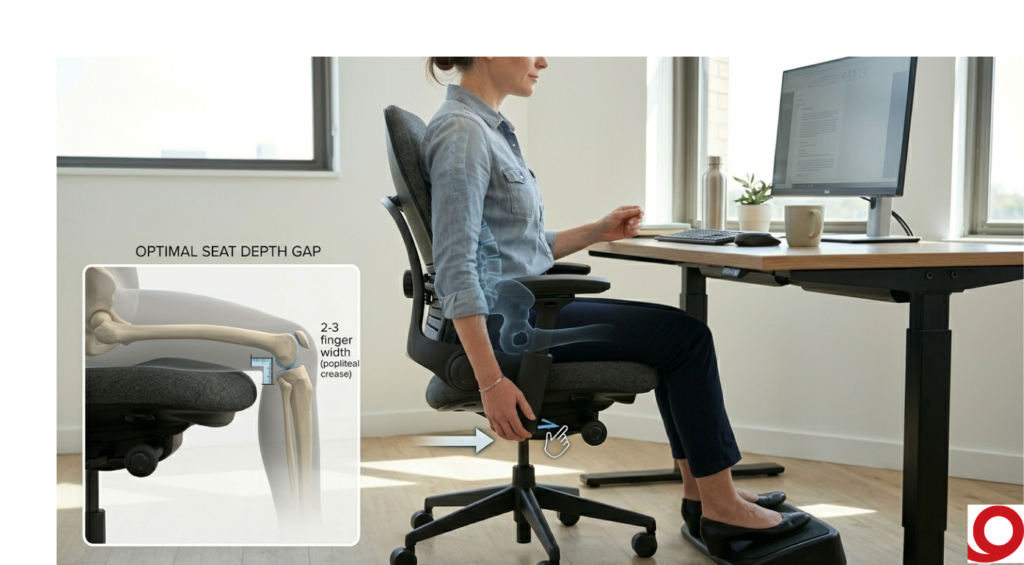
Too deep → You slouch forward.
Too shallow → You lose thigh support.
NIOSH highlights the importance of properly fitted seating in reducing musculoskeletal strain (source:https://www.cdc.gov/niosh/topics/ergonomics/).
Seat depth adjustment helps achieve that fit across different body types.
Cushion Performance Over Time
Unlike mesh chairs, the Leap uses high-density foam cushioning.
Pros:
- Softer initial feel
- Warmer in cooler climates
- Familiar comfort
Cons:
- Foam can soften slightly over years
- Less airflow compared to mesh
Research indexed in PubMed consistently links sustained poor posture and pressure distribution to discomfort (source:https://pubmed.ncbi.nlm.nih.gov/).
The Leap’s foam distributes weight well initially. Long-term durability is strong, but it won’t behave exactly like tensioned mesh.
Backrest Flexibility: The Leap Advantage
Steelcase calls this “LiveBack” technology.
In practical terms:
The backrest shifts subtly as you move.
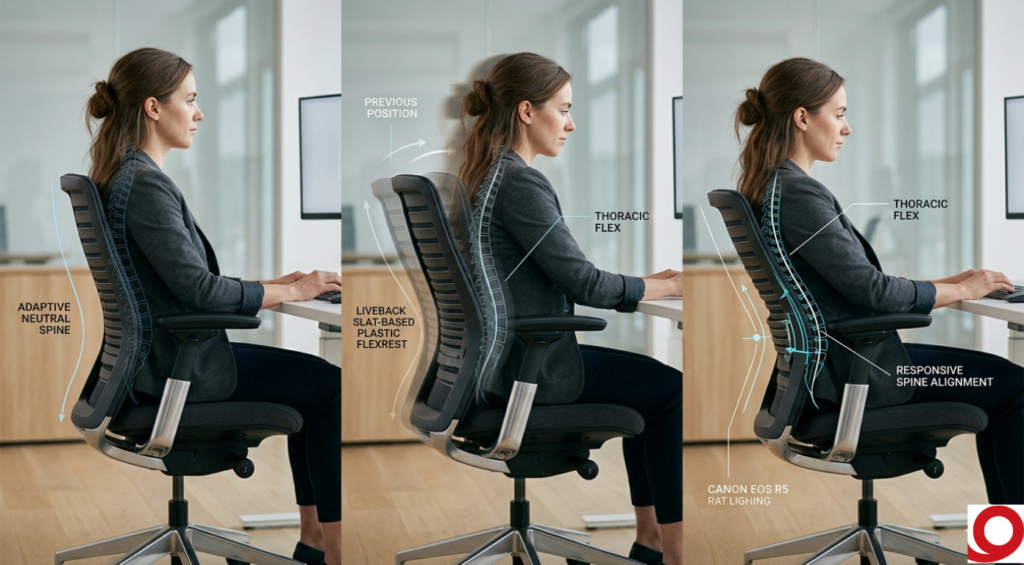
Lean forward slightly → back responds.
Lean back → back adapts.
It doesn’t feel mechanical. It feels responsive.
If you shift positions often throughout the day, this can feel more natural than a rigid backrest.
Armrest Adjustability
The Leap offers strong armrest adjustability:
- Height
- Width
- Pivot
- Depth
Shoulder tension often originates from poor arm positioning.
Adjustable armrests reduce shoulder elevation and neck strain during long typing sessions.
Small adjustments make a bigger difference than most buyers expect.
Climate Considerations
Unlike full-mesh chairs, the Leap retains warmth.
In cooler environments (UK winters, Canadian offices), this can feel comfortable.
In warmer rooms without strong airflow, it may feel warmer than mesh alternatives.
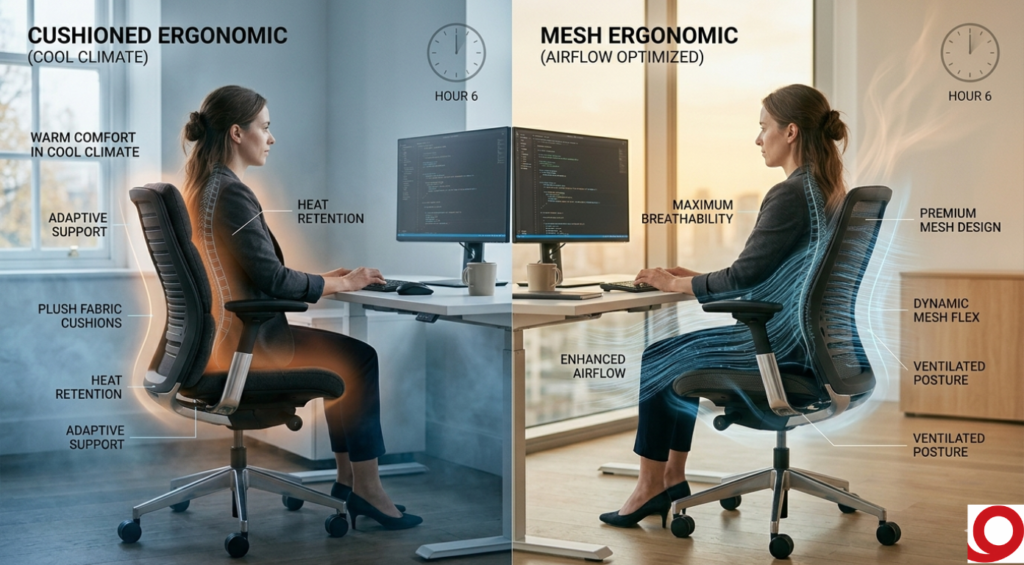
Climate rarely gets discussed in reviews but by hour six, it matters.
Durability & Warranty
Steelcase offers a 12-year warranty on the Leap.
That places it firmly in the premium category.
Frame quality feels solid.
Mechanisms feel engineered rather than flimsy.
Over years of use, the structure tends to hold up well.
Cushion softness may evolve slightly but overall durability remains strong.
Who the Leap Is Best For
The Leap is ideal if:
☐ You sit 6–10 hours daily
☐ You prefer adjustable lumbar depth
☐ You like adaptive cushioning
☐ You shift positions often
☐ You prefer softer seating over firm mesh
It’s especially strong for:
- Remote workers
- Programmers
- Professionals with lower back sensitivity
- Those who dislike rigid seating
Who Might Prefer Something Else
The Leap may not be ideal if:
☐ You run warm while working
☐ You prefer firm tension-based support
☐ You want full mesh breathability
☐ You prefer size-specific models (like Aeron A/B/C)
It’s adaptable but not suspension-based.
Long-Term Ownership Perspective
After extended use, what stands out most is balance.
The Leap doesn’t force posture.
It supports it.
It adapts rather than suspends.
That distinction becomes clearer over months, not minutes.
Final Verdict
The Steelcase Leap is one of the most adjustable ergonomic chairs available.
Its strength lies in customization:
- Lumbar depth control
- Seat depth adjustment
- Adaptive back movement
If you want a chair that moves with you rather than holding you in structured suspension, the Leap delivers.
It’s not the coolest in temperature.
It’s not the firmest in feel.
But for many long-hour users, it strikes a balance between comfort and ergonomic support that feels natural.
Official product page:
Leap Office Chair & Workspace Seating | Steelcase
FAQ
Is the Steelcase Leap good for long hours?
Yes. Its adjustable lumbar system and adaptive back design make it suitable for extended work sessions.
Does the Leap help with back pain?
It supports lumbar alignment and posture, which may reduce strain during prolonged sitting. Persistent pain should be evaluated medically.
Is the Leap better than the Aeron?
It depends on preference. The Leap offers more lumbar adjustability, while the Aeron offers breathable suspension support.
How long does the Steelcase Leap last?
With a 12-year warranty and durable construction, it is designed for long-term use.