


If you’re a heavier person, most office chairs don’t fail immediately.
They fail slowly.
The seat cushion compresses.
The frame flexes.
The lumbar support drifts out of alignment.
And by month six, you’re adjusting constantly.
Finding the best office chair for heavy people isn’t about “extra padding.”
It’s about structure, weight rating, seat depth, and long-term durability.
This guide breaks down what actually matters and which premium chairs consistently hold up under higher weight loads.
Why Standard Chairs Don’t Work Well for Heavier Users
Many mainstream office chairs are rated for 250–275 lbs.
That doesn’t mean they break above that weight, but long-term structural performance may decline.
Common issues:
- Cushion flattening
- Frame stress
- Gas lift wear
- Reduced lumbar stability
The Mayo Clinic notes that proper seated posture and support reduce back strain over time.
If the chair structure deforms, posture follows.
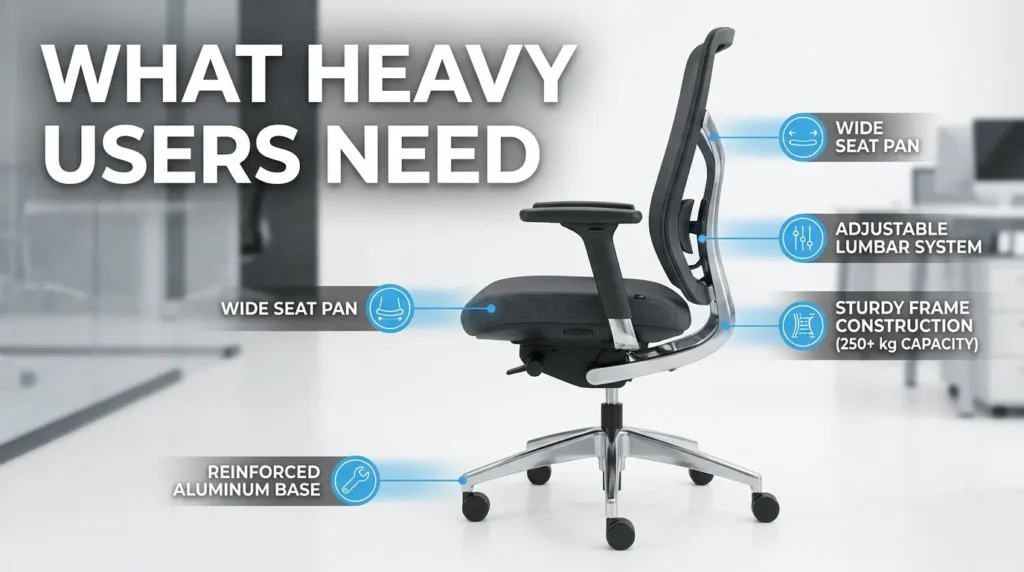
What Heavy Users Actually Need
Before product recommendations, here’s what matters most:
1️⃣ Higher Weight Capacity (350–500 lbs Preferred)
Look for chairs rated clearly above your weight.
More margin = longer lifespan.
2️⃣ Reinforced Frame & Base
Metal base preferred over plastic.
Stronger tilt mechanisms.
3️⃣ Thicker or High-Tension Seat Support
Either:
- Dense foam engineered for durability
OR - Suspension mesh that doesn’t compress
4️⃣ Wider Seat Width
Crowding increases hip pressure and thigh compression.
The Canadian Centre for Occupational Health and Safety (CCOHS) emphasizes adequate seat width and depth for reducing lower limb strain.
5️⃣ Strong Lumbar Support
Heavier users often experience greater lower-back load.
The UK Health and Safety Executive (HSE) highlights lumbar support alignment as critical for reducing musculoskeletal stress.
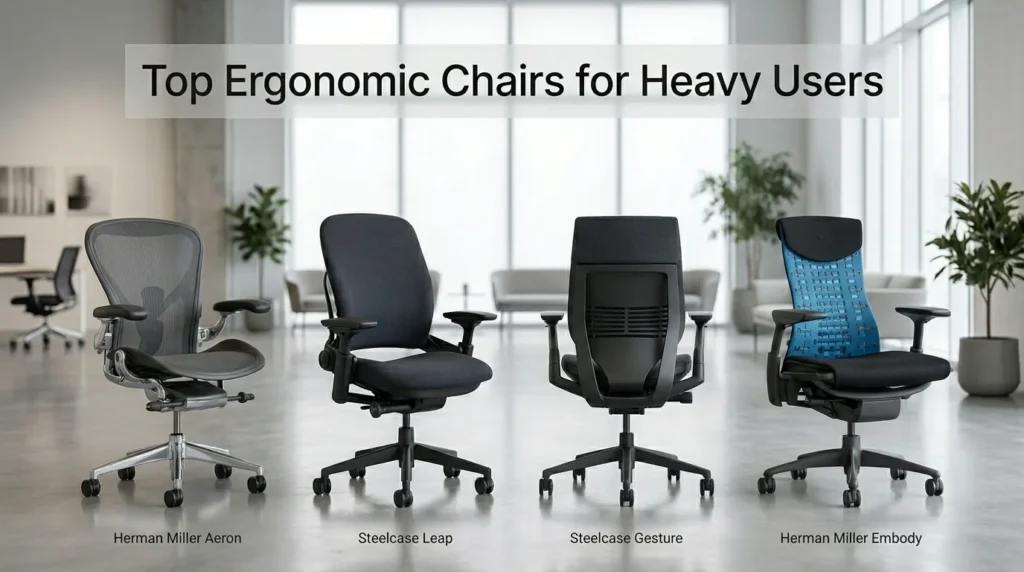
Best Ergonomic Chairs for Heavy People (Premium Options)
1️⃣ Herman Miller Aeron (Size C)
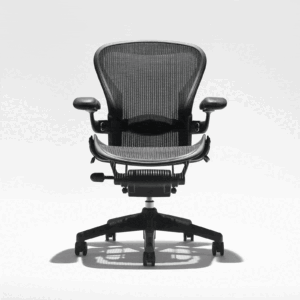
Weight capacity: ~350 lbs (varies by configuration)
Why it works:
- High-tension mesh suspension (no foam compression)
- Strong aluminum frame
- Size C offers wider seat
- Durable long-term performance
Best for:
Heavier users who prefer structured support and breathability.
Because it uses mesh rather than foam, it avoids cushion breakdown over time.
2️⃣ Steelcase Leap (High Weight Rating)
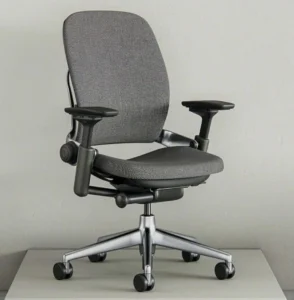
Weight capacity: ~400 lbs (check configuration)
Why it works:
- Dense foam cushion
- Adjustable lumbar depth
- Strong frame and base
- Seat depth adjustment
Best for:
Heavier users who want adjustable lumbar pressure and softer seating.
The Leap’s construction feels solid under load.
3️⃣ Steelcase Gesture
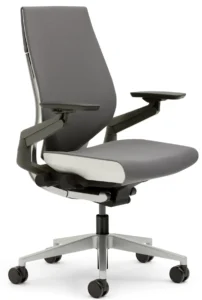
Weight capacity: ~400 lbs
Why it works:
- Wide seat design
- Strong upper-body support
- Durable tilt mechanism
- Reinforced structure
Best for:
Heavier professionals who shift positions frequently and need arm flexibility.
4️⃣ Herman Miller Embody
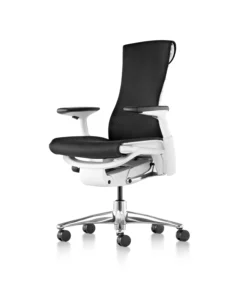
Weight capacity: ~300–350 lbs (check model specs)
Why it works:
- Pixelated support system distributes weight
- Flexible back spine support
- Strong build quality
Best for:
Heavier users who want pressure distribution without rigid mesh feel.
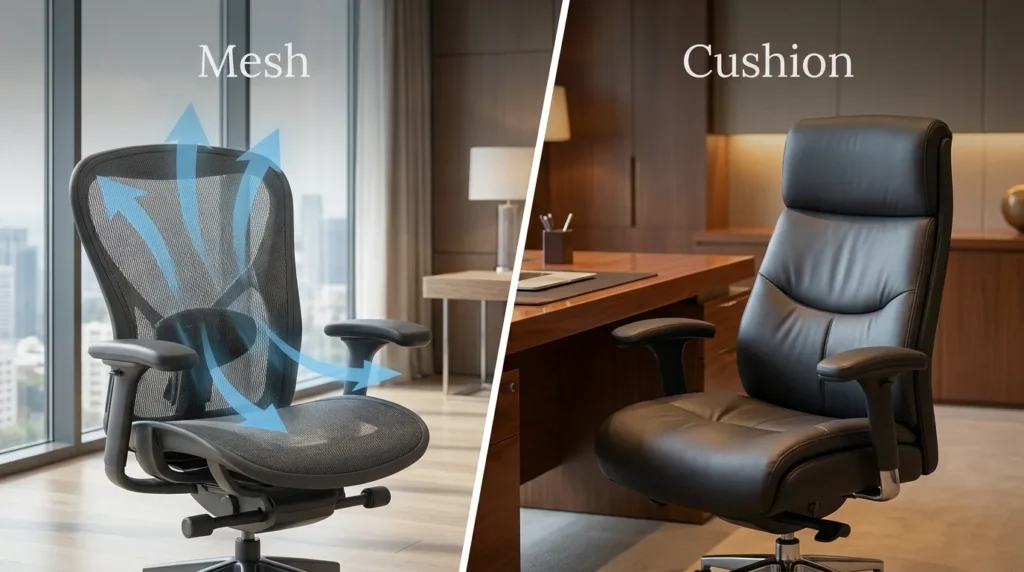
Mesh vs Cushion for Heavy Users
Mesh Advantages:
- No foam flattening
- Even weight distribution
- Cooler during long sessions
Cushion Advantages:
- Softer feel
- Traditional comfort
- May feel more familiar
The NIH notes that pressure distribution plays a key role in reducing lower-back strain.
For heavier users, pressure distribution becomes even more important.
Mesh often performs well long-term.
Dense foam can work but lower-density foam will degrade.
8-Hour Performance Reality
At higher body weight:
- Seat compression shows faster
- Lumbar drift becomes noticeable
- Frame stability matters more
A chair that feels fine in a showroom may feel different at hour seven.
Premium models hold structural integrity better over time.
Quick Decision Matrix for Heavy Users
| Preference | Best Option |
| 350+ lbs & want mesh | Aeron Size C |
| 300–400 lbs & want cushion | Steelcase Leap |
| Wide seat + upper body freedom | Steelcase Gesture |
| Adaptive spine feel | Herman Miller Embody |
There isn’t one universal winner.
Fit and structure matter more than brand.
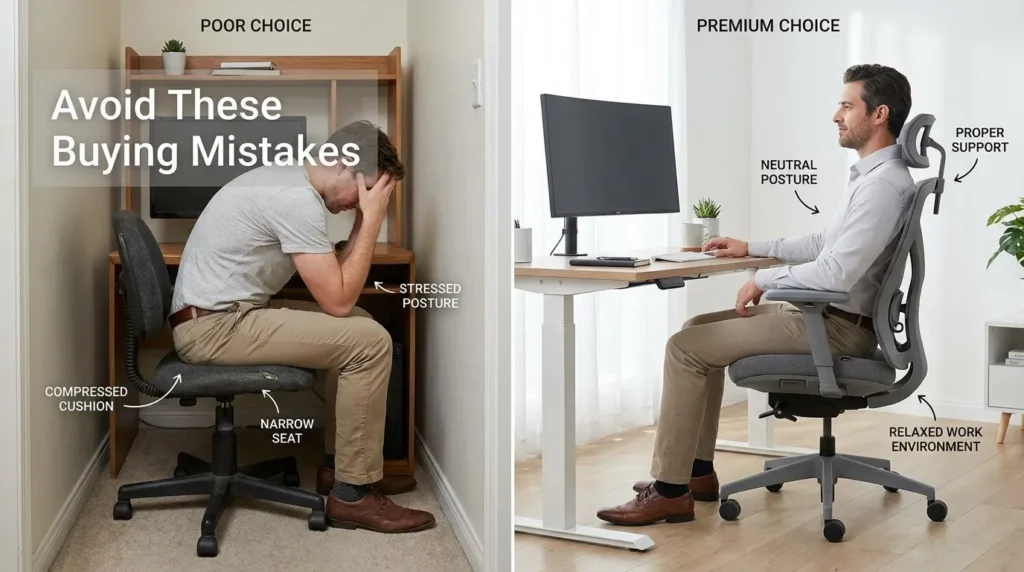
Common Mistakes Heavy Buyers Make
❌ Buying chairs rated exactly at body weight
❌ Ignoring base material (plastic vs aluminum)
❌ Overvaluing soft cushion
❌ Not checking seat width
❌ Skipping lumbar testing
Long-term durability matters more than first impression comfort.
Final Recommendation Framework
If you want long-term structural support with no cushion breakdown → Herman Miller Aeron Size C.
If you want lumbar customization and dense cushioning → Steelcase Leap.
If you want strong arm support and wider seating → Steelcase Gesture.
If you want adaptive weight distribution → Herman Miller Embody.
For heavier users, engineering matters more than marketing.
FAQ
What is the best office chair for a heavy people?
Chairs with 350–400+ lb ratings, reinforced frames, and strong lumbar support perform best.
Is mesh better than foam for heavy users?
Mesh avoids compression over time, while dense foam provides softer comfort initially.
How much weight can premium office chairs hold?
Many premium chairs support 300–400 lbs depending on configuration.Do heavy people need wider seats?
Yes. Adequate seat width reduces hip and thigh pressure during prolonged sitting.