


Tight hip flexors & weak glutes can contribute to lower back pain by altering pelvic alignment and increasing strain on the lumbar spine. Regular movement, stretching, glute strengthening, and an ergonomic workstation can help reduce discomfort caused by prolonged sitting.
How Often Should You Take Breaks From Sitting?
Most people blame their chair when their lower back starts aching.
And sometimes the chair is the problem.
But often?
The issue isn’t what you’re sitting on.
It’s what sitting is doing to your muscles.
If you sit most of the day, two things almost always happen quietly in the background:
- Your hip flexors tighten
- Your glutes weaken
Over time, that combination creates the perfect environment for lower back pain.
Let’s break down why.
Why Sitting Changes Your Muscles
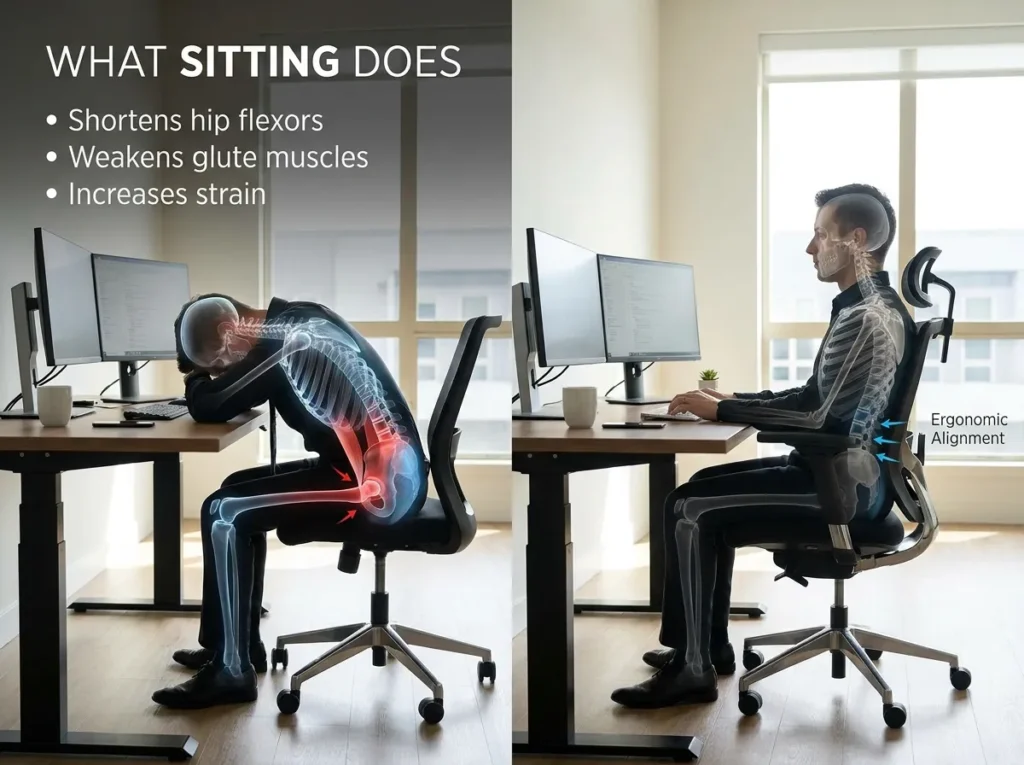
When you sit for long periods:
- Your hips stay flexed
- Your glutes remain mostly inactive
- Your pelvis loses neutral positioning
The Centers for Disease Control and Prevention (CDC) highlights the risks associated with prolonged sedentary behavior, including musculoskeletal strain and reduced muscle engagement.
Your body is built for movement.
When it doesn’t get it, muscle balance shifts.
What Tight Hip Flexors Actually Do
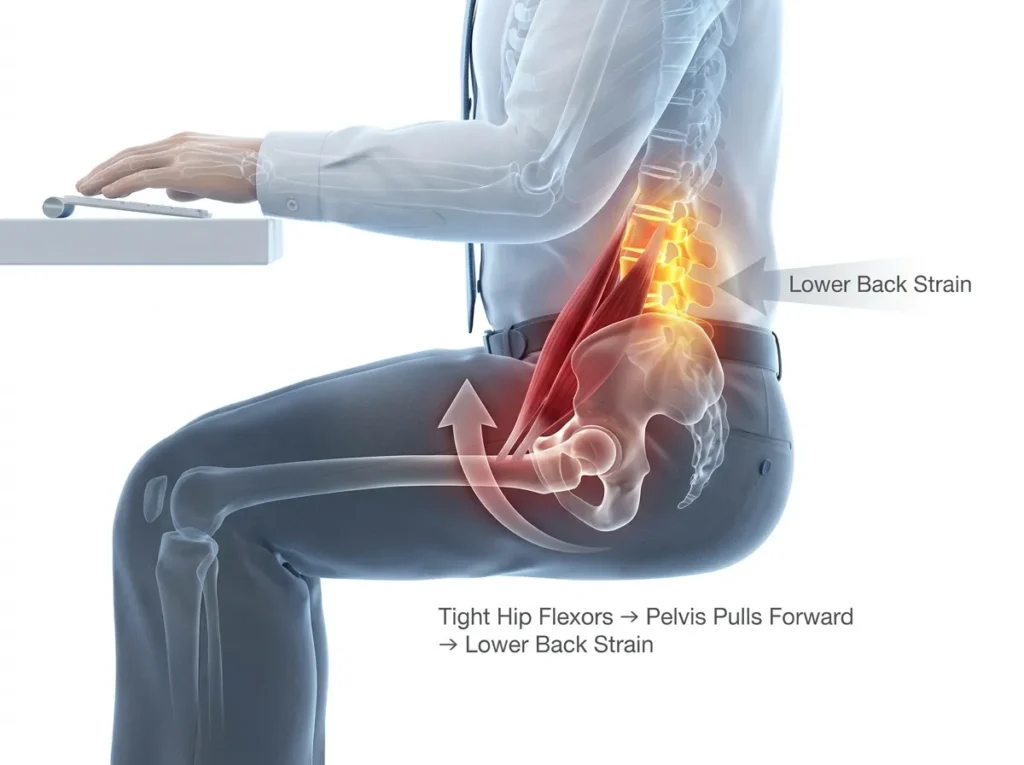
Your hip flexors run from your lower spine and pelvis to the front of your thigh.
When they stay shortened all day:
- They pull your pelvis forward
- They increase stress on the lumbar spine
- They reduce hip extension when you stand
Over time, this can exaggerate spinal strain.
Research archived through PubMed consistently discusses how altered pelvic positioning affects lumbar loading patterns.
In simple terms:
Tight hips change your spinal mechanics.
What Weak Glutes Contribute
Your glutes are primary stabilizers of the pelvis and hips.
When you sit:
They’re largely inactive.
NIOSH (National Institute for Occupational Safety and Health) reinforces that static postures reduce muscular activation and increase strain during prolonged desk work.
If your glutes aren’t stabilizing your pelvis:
Your lower back muscles step in.
They aren’t meant to stabilize you for 8+ hours.
So they fatigue.
And fatigue often turns into pain.
The Muscle Imbalance That Causes Desk Back Pain
Here’s the common pattern:
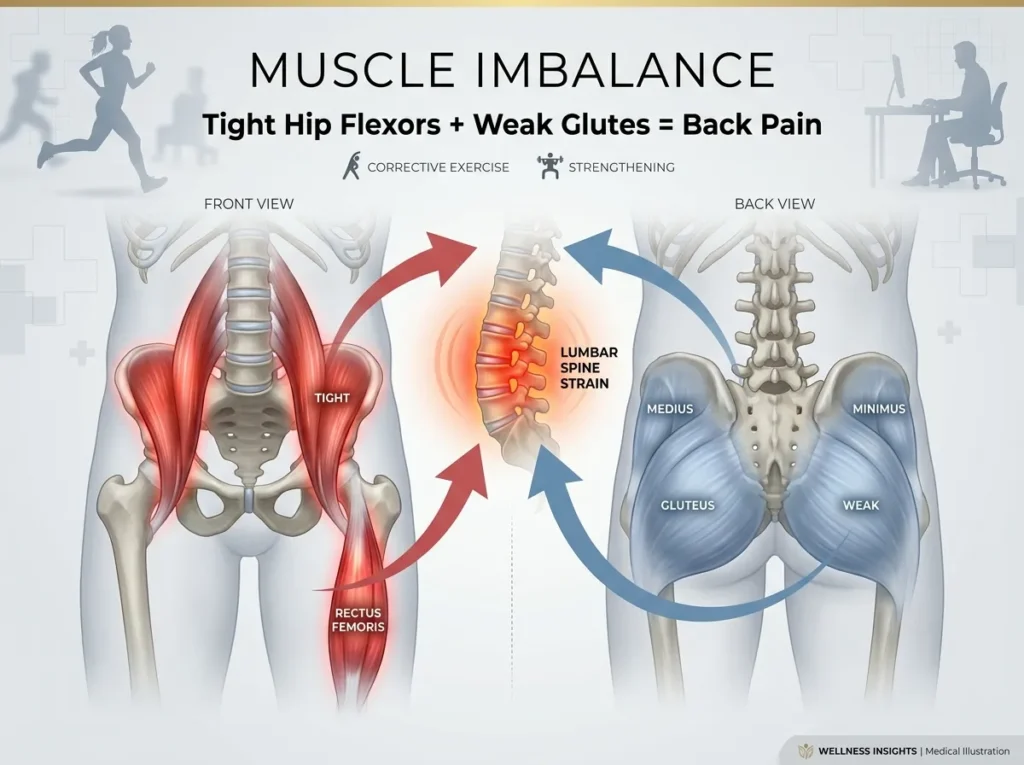
Tight hip flexors
- Weak glutes
= Pelvic instability
= Increased lumbar strain
This is sometimes referred to informally as “lower crossed syndrome” in biomechanics discussions, a pattern of muscular imbalance around the pelvis.
The longer you sit without movement, the more this imbalance develops.
Signs Your Hips & Glutes Are Contributing to Back Pain
Be honest — do any of these sound familiar?
- Lower back feels tight after standing up
- Hips feel stiff in the morning
- You lean forward while walking
- Your glutes feel “inactive” during squats
- Pain improves briefly after stretching
If yes, muscle imbalance is likely part of the picture.
Your chair alone may not fix this.
How Often Should You Take Breaks From Sitting?
This is the real question.
The CDC recommends breaking up prolonged sitting with regular movement to reduce health risks (source).
But what does that look like practically?
The General Rule:
Stand or move every 30–60 minutes.
Even short breaks reduce cumulative spinal compression.
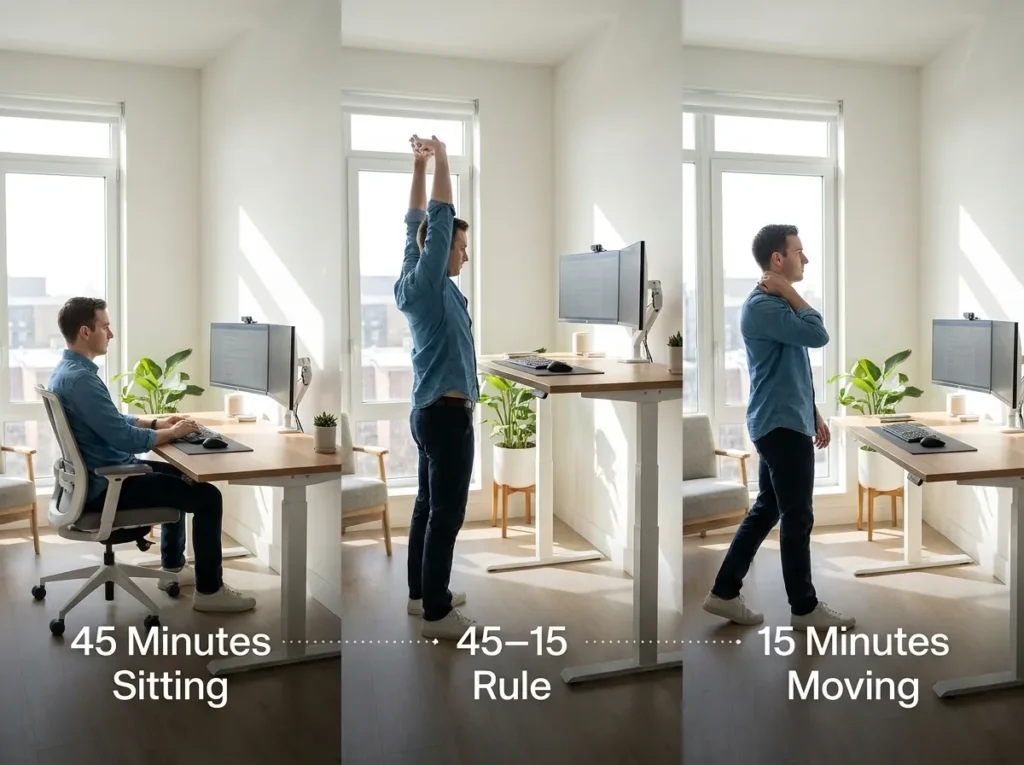
The 45–15 Method
A simple framework many desk workers use:
45 minutes sitting
15 minutes standing or moving
If 15 minutes isn’t realistic, aim for:At least 2–5 minutes of movement per hour.
Movement doesn’t need to be dramatic.
Walk to refill water.
Do 10 bodyweight squats.
Stretch your hip flexors.
Consistency matters more than intensity.
Why Movement Works
When you stand and move:
- Hip flexors lengthen
- Glutes re-engage
- Pelvis rebalances
- Spinal compression decreases
Biomechanical research indexed in PubMed frequently shows that posture variation reduces cumulative spinal loading compared to static sitting.
Static posture, even good posture, eventually becomes stressful.
Movement restores circulation and muscle activation.
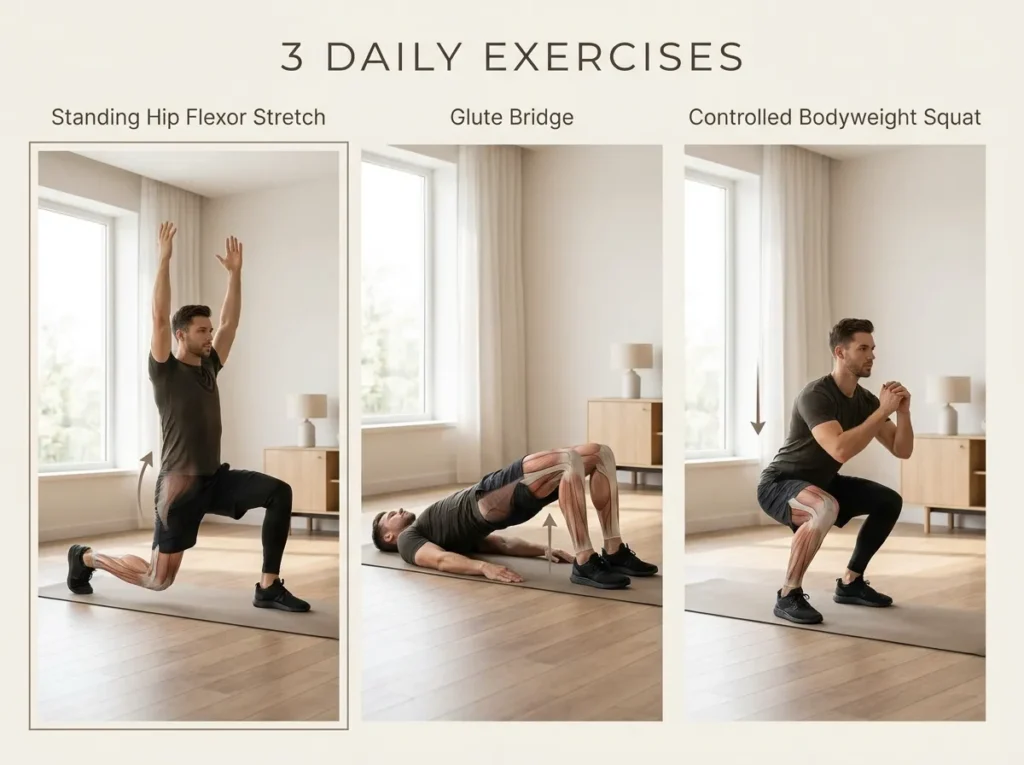
Simple Exercises That Counteract Sitting
You don’t need a gym.
Start here:
1️⃣ Standing Hip Flexor Stretch
- Step one foot back
- Gently tuck pelvis
- Lean forward slightly
- Hold 20–30 seconds per side
2️⃣ Glute Bridges
- Lie on your back
- Feet flat
- Drive hips upward
- Squeeze glutes at the top
3️⃣ Bodyweight Squats
- Slow, controlled
- Focus on glute activation
Just 5–10 minutes daily can noticeably reduce stiffness.
Why Your Ergonomic Chair Isn’t the Whole Solution
Even the best chair can’t:
- Activate weak glutes
- Lengthen tight hip flexors
- Replace movement
OSHA workstation guidance focuses on posture and alignment, but ergonomics is incomplete without dynamic movement.
Think of it this way:
Your chair reduces strain.
Movement restores balance.
Strength prevents recurrence.
You need all three.
When to Be More Concerned
If your back pain:
- Radiates down one leg
- Causes numbness
- Persists even with movement
- Worsens at night
Consult a healthcare professional.
Muscle imbalance is common but persistent neurological symptoms require evaluation.
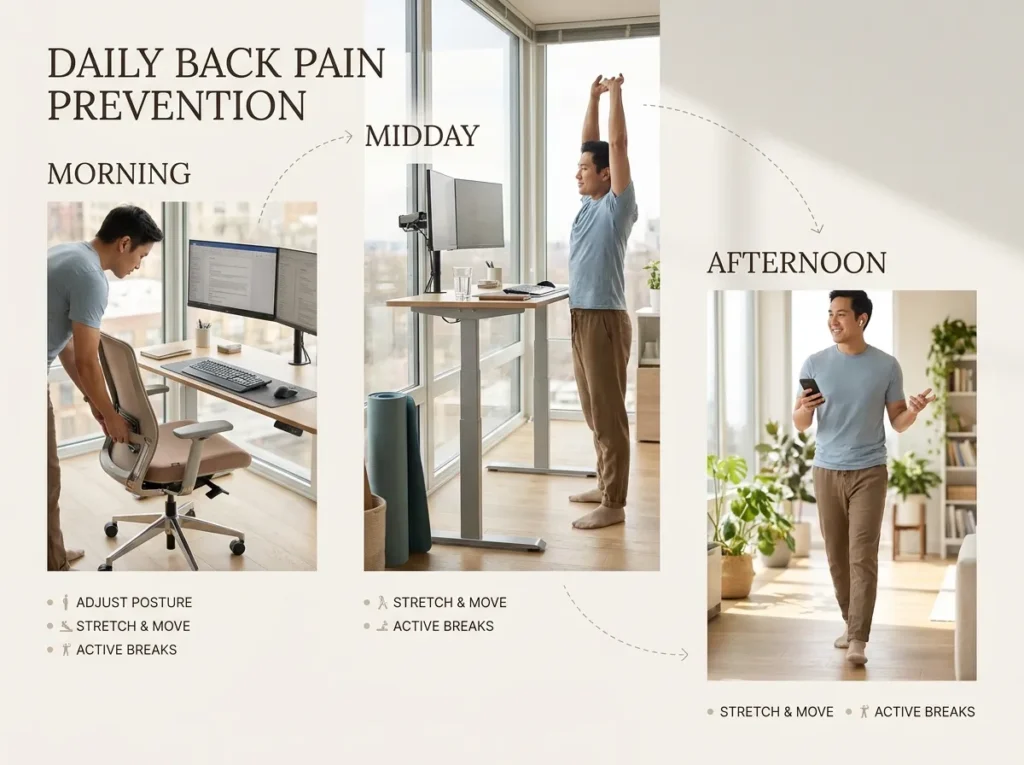
Practical Daily Plan
If you work a typical 8-hour desk day:
Morning:
- Adjust chair properly
- Perform 2 minutes of glute activation
Midday:
- Take movement break every 45–60 minutes
- Stretch hip flexors once
Afternoon:
- Stand for at least one call
- Walk for 5 minutes before finishing work
Even small habits dramatically reduce cumulative strain.
Final Thought
Tight hip flexors and weak glutes are often the hidden drivers behind desk-related lower back pain.
Not dramatic injuries.
Not catastrophic damage.
Just imbalance.
You don’t need extreme changes.
You need:
- Regular movement
- Brief strengthening
- Consistent breaks
- Smart workstation setup
Start with standing once per hour.
Add 5 minutes of glute work.
Your lower back usually responds faster than you expect.
FAQ
Can tight hip flexors cause lower back pain?
Yes. Tight hip flexors can pull the pelvis forward, increase stress on the lumbar spine, and contribute to lower back discomfort during prolonged sitting.
Do weak glutes contribute to desk-related back pain?
Yes. Weak glutes reduce pelvic stability, causing the lower back muscles to work harder and fatigue more quickly.
How often should I stand up if I work at a desk?
Stand, stretch, or walk every 30–60 minutes. Even short movement breaks help reduce spinal compression and improve circulation.
What exercises help tight hip flexors?
Standing hip flexor stretches, lunges, and mobility exercises help lengthen tight hip flexors caused by prolonged sitting.
How do I strengthen weak glutes?
Glute bridges, bodyweight squats, clamshells, and resistance band exercises are effective for improving glute strength and pelvic stability.
Can an ergonomic chair fix weak glutes?
No. An ergonomic chair reduces strain but cannot replace movement or strengthen inactive muscles. Regular exercise and posture changes are still necessary.