


If you work at a desk, you probably know sitting too long isn’t ideal.
But the real question is:
👉 How often should you take breaks from sitting?
You should take a break from sitting every 30–60 minutes. Stand up, walk, or move for 1–5 minutes to reduce stiffness, improve circulation, and reduce strain caused by prolonged sitting. Longer movement breaks of 5–10 minutes every few hours can provide additional benefits.
The answer is based on posture science, circulation research, and ergonomic best practices.
The Short Answer (Quick Summary)
✔ Stand or move every 30–60 minutes
✔ Take a short break for 1–5 minutes
✔ Do a longer movement break every 2–3 hours
The key is frequency, not duration.
Small, regular movement beats one long stretch break.
Why Sitting Too Long Causes Problems
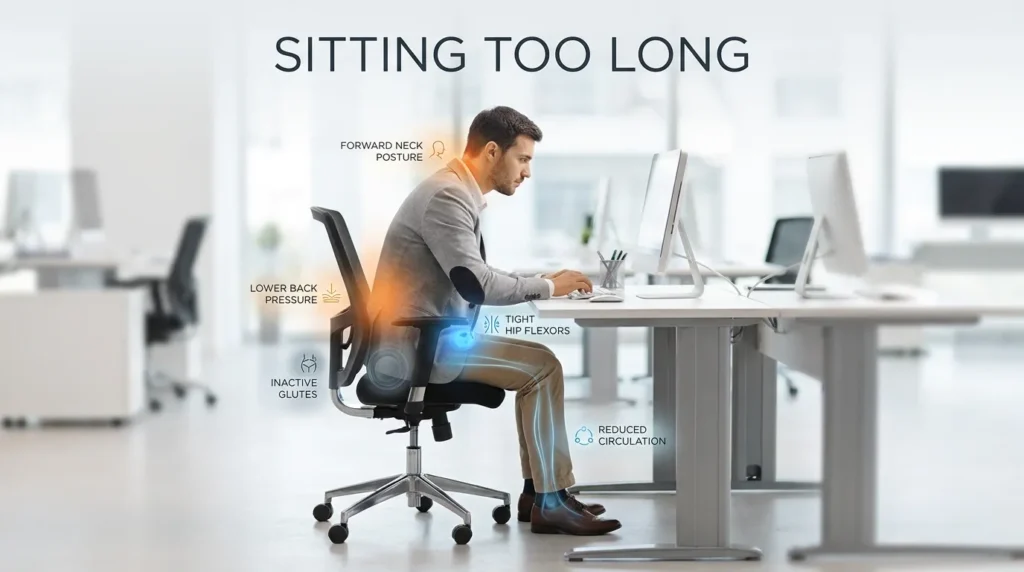
When you sit for extended periods:
- Pressure increases on lumbar discs
- Hip flexors tighten
- Glutes deactivate
- Circulation slows
- Core muscles relax
- Neck and shoulders round forward
According to Harvard Health Publishing, prolonged sitting is associated with musculoskeletal discomfort and increased spinal strain, especially without movement breaks.
Even perfect posture becomes harmful if held too long.
Your spine needs motion.
The 30-Minute Rule
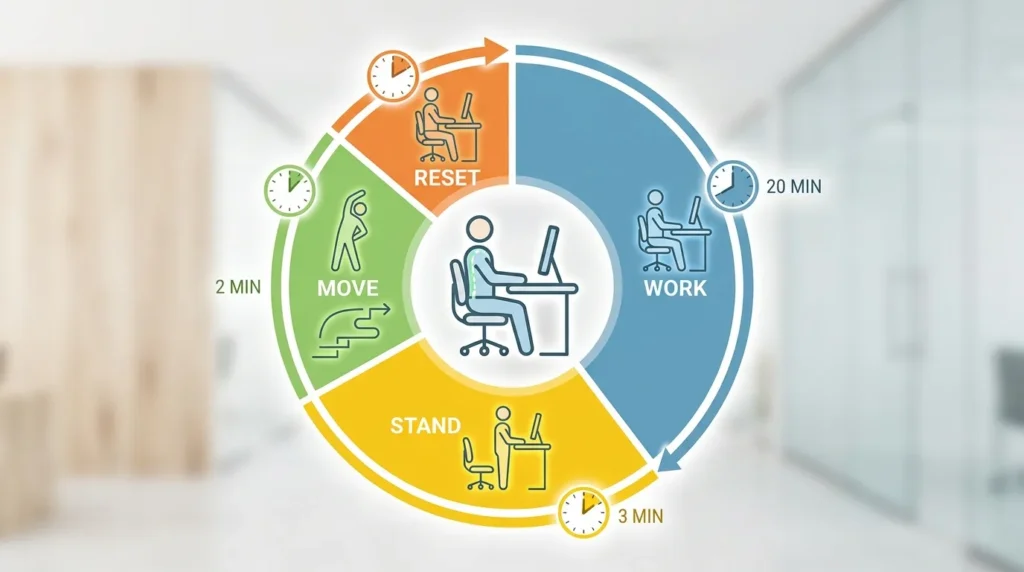
Many ergonomics specialists recommend moving every 30 minutes.
This does NOT mean:
❌ A full workout
❌ A 15-minute walk
❌ Leaving your desk for long periods
It simply means:
- Stand up
- Stretch briefly
- Walk for 1–2 minutes
- Roll shoulders
- Reset posture
The Occupational Safety and Health Administration (OSHA) emphasizes regular posture changes as a key ergonomic strategy to reduce strain.
Frequent micro-breaks reduce cumulative stress on spinal structures.
What Happens If You Wait Too Long?
If you sit 2–3 hours without moving:
- Disc compression increases
- Blood flow decreases
- Muscle stiffness builds
- Mental fatigue rises
By the time pain appears, strain has already accumulated.
Prevention works better than correction.
Ideal Break Schedule for Desk Workers
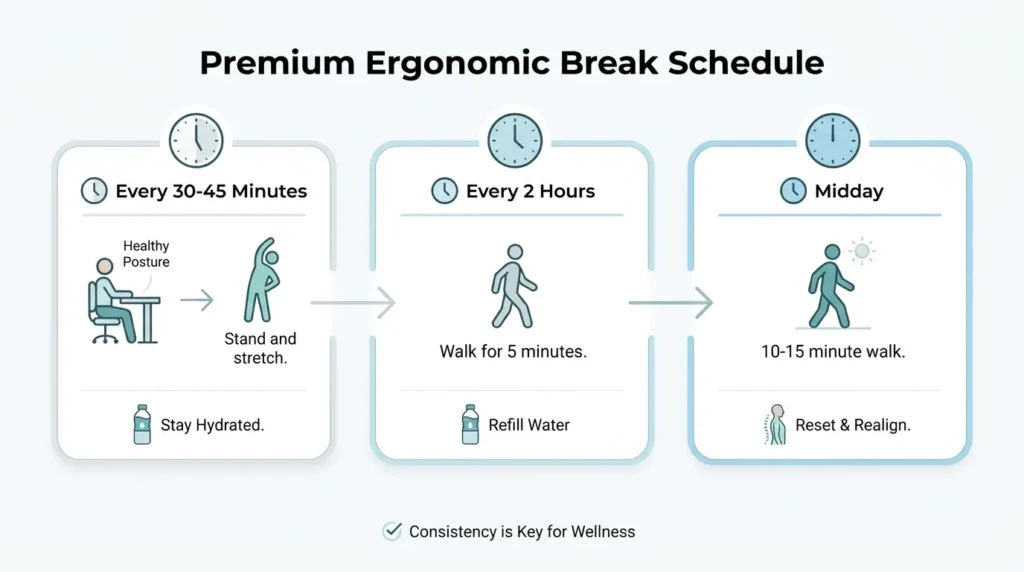
Here’s a realistic and effective pattern:
🔁 Every 30–45 Minutes
- Stand for 1–3 minutes
- Stretch arms overhead
- Roll shoulders
- Take 10–20 steps
🚶 Every 2 Hours
- Walk for 5 minutes
- Refill water
- Light hip stretch
🌤 Midday Reset (Once Daily)
- 10–15 minute walk
- Gentle back extension movements
This pattern supports spinal hydration and reduces stiffness.
The Cleveland Clinic notes that movement and posture variation are central to preventing low back discomfort related to prolonged sitting.
Micro-Break Ideas (No Gym Required)
You don’t need equipment.
Try:
- Standing desk transition
- Calf raises
- Neck mobility circles
- Seated spinal twist
- Wall chest stretch
- Gentle hamstring stretch
Even walking to another room helps.
Does a Standing Desk Replace Breaks?
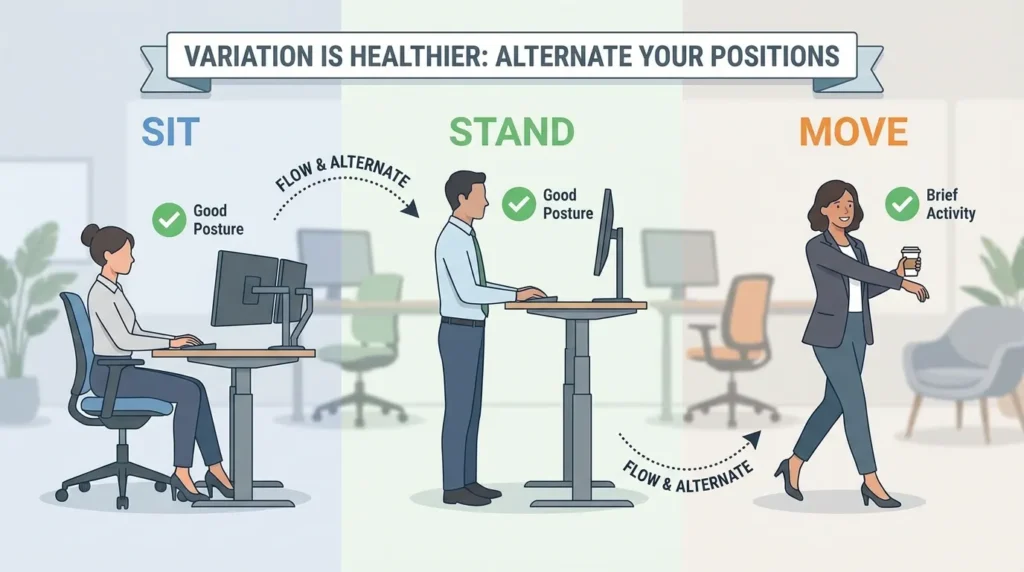
No.
Standing still for long periods also creates strain.
Alternating between sitting and standing is helpful but movement still matters.
If you use a sit-stand desk:
- Sit 45–60 minutes
- Stand 15–30 minutes
- Repeat
- Still take short walking breaks
Standing is a variation, not a cure.
Signs You’re Not Taking Enough Breaks
⚠ Stiff lower back
⚠ Neck tightness
⚠ Tingling in legs
⚠ Heavy shoulders
⚠ Brain fog
If discomfort improves quickly after standing, your break frequency is likely too low.
How to Remember to Take Breaks
Practical strategies:
✔ Set a recurring timer (30–45 minutes)
✔ Use productivity apps with posture reminders
✔ Link movement to habits (every email batch = stand)
✔ Keep water slightly out of reach
Environmental design encourages behavior change.
How Long Should a Break Be?
You don’t need long interruptions.
1–3 minutes is enough to:
- Reset disc pressure
- Stimulate circulation
- Reactivate muscles
Longer breaks (5–10 minutes) every few hours are beneficial but optional.
Consistency matters more than duration.
What About Productivity?
Many people fear breaks reduce productivity.
Research suggests the opposite:
- Short movement improves focus
- Circulation boosts alertness
- Reduced discomfort improves task endurance
Movement is not wasted time it protects both body and output.
Quick Reference Guide
| Situation | Recommended Action |
| Office desk work | Move every 30–45 minutes |
| Long virtual meetings | Stand briefly during meeting |
| Deep focus sessions | Use 45-minute work cycles |
| Gaming or editing | Set automatic timer |
The Core Principle
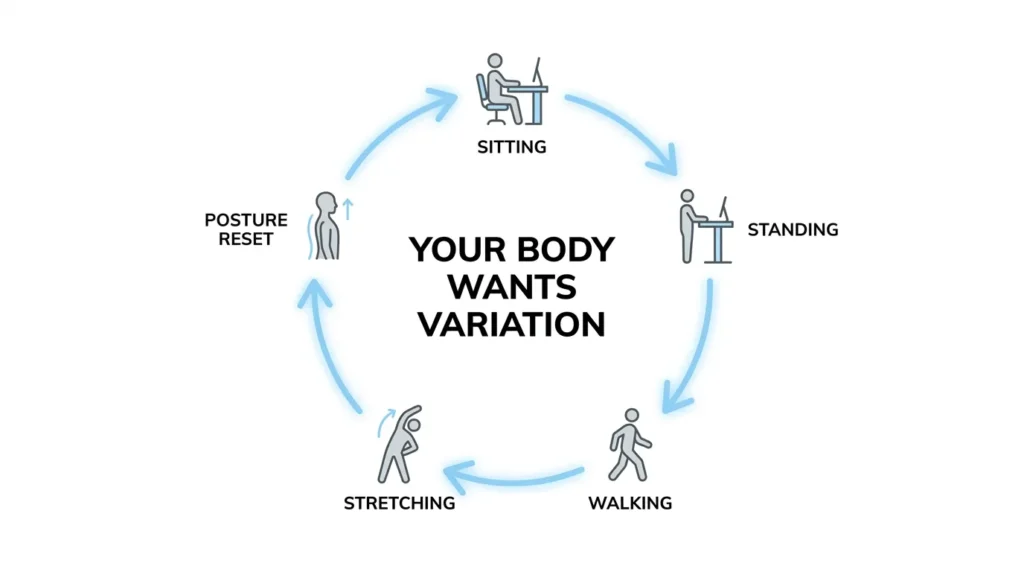
Your body doesn’t want:
- Perfect sitting
- Perfect standing
- Perfect posture
It wants:
🔁 Variation
Frequent, small movements protect your back more effectively than occasional large efforts.
FAQ
How often should I stand up from my desk?
Every 30–60 minutes for at least 1–3 minutes.
Are micro-breaks really effective?
Yes. Even brief posture changes reduce cumulative spinal strain.
Can sitting too long cause permanent back damage?
Prolonged static posture can contribute to chronic discomfort, especially without movement and proper ergonomics.
Is it better to sit or stand while working?
Alternating between both, with frequent movement, is best.