


By mid-afternoon, it usually creeps in.
You shift in your chair.
Lean forward.
Stretch a little.
And there it is, that dull, stubborn ache in your lower back.
If you’re dealing with lower back pain from sitting at a desk, you’re not alone. And more importantly, you’re not broken.
In most cases, this isn’t a serious injury. It’s your body reacting to long, static hours in one position.
Let’s break down what’s really happening and how to fix it without turning your workday upside down.

Why Does Sitting Cause Lower Back Pain?
Sitting for long periods increases pressure on spinal discs, reduces core engagement, tightens hip flexors, and limits blood flow. Over time, this creates muscular imbalance and strain in the lower back.
Now let’s go deeper.
When you sit for hours:
- Your hip flexors shorten.
- Your glutes become inactive.
- Your core relaxes.
- Your pelvis tilts.
- Your lumbar spine loses its natural curve.
According to the Mayo Clinic, prolonged sitting can increase stress on spinal structures especially when posture isn’t supported.
But here’s the part most people don’t expect:
It’s not just “bad posture.”
It’s lack of movement.
Even perfect posture becomes harmful if you hold it too long.
60-Second Desk Self-Test
Sit how you normally work and ask yourself:
- Are both feet flat on the floor?
- Are your knees level with or slightly below hips?
- Is your lower back supported without effort?
- Are you leaning toward your screen?
- Are your shoulders tense?
If you answered “no” to two or more, your setup is likely contributing to your pain.
If someone filmed you working for two hours, what posture would they see most often?
How to Relieve Lower Back Pain From Sitting (Quick Fix List)
Start here:
- Stand and walk for 2–3 minutes
- Perform 10 gentle back extensions
- Stretch hip flexors (30 seconds each side)
- Reset your chair height
- Lightly engage your core when seated
The Cleveland Clinic highlights movement breaks as one of the simplest ways to reduce sitting-related strain.
You don’t need a dramatic solution.
You need interruption.
Is Sitting 8 Hours Bad for Your Back?
Yes — if uninterrupted.
Research summarized by Harvard Health Publishing suggests prolonged static sitting contributes to musculoskeletal stress.(Source)
But here’s the nuance:
It’s not 8 hours total.
It’s 8 hours without variation.
Try:
- Moving every 30–60 minutes
- Alternating sit/stand cycles
- Adjusting posture slightly throughout the day
Your spine prefers variety.
Can an Office Chair Cause Lower Back Pain?
Absolutely.
A chair may contribute to pain if:
- Lumbar support is missing or poorly positioned
- Seat height prevents feet from resting flat
- Seat depth pushes you forward
- Armrests force shoulders upward
The Occupational Safety and Health Administration recommends maintaining neutral spine alignment and proper workstation setup to prevent strain. (Source)
Even expensive chairs can fail if adjusted poorly.
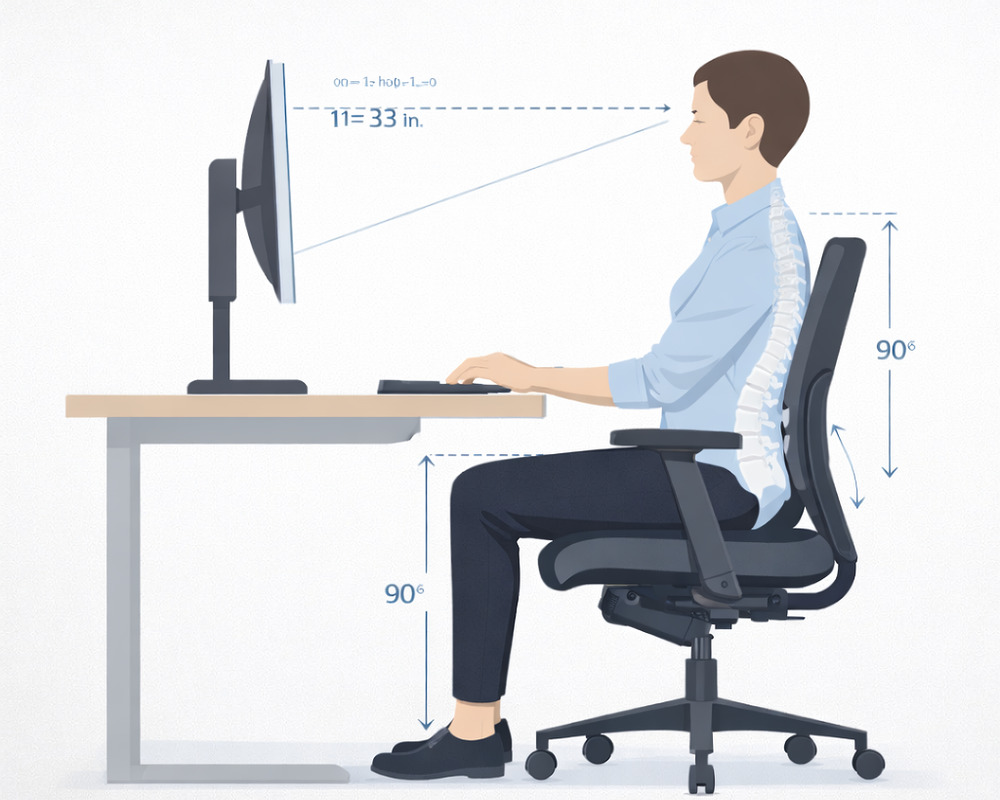
Ideal Desk Setup Measurements
| Element | Recommended Position |
| Chair height | Feet flat, knees ~90° |
| Desk height | Forearms parallel to floor |
| Monitor top | At or slightly below eye level |
| Screen distance | About arm’s length |
| Lumbar support | Fills natural lower-back curve |
Often, adjusting these alone reduces discomfort significantly.
The Real Root Causes Most Articles Skip
1. Posterior Pelvic Tilt
Slouching flattens your lumbar curve and increases disc pressure.
2. Inactive Glutes
Sitting switches off the glutes. Your lower back compensates.
3. Tight Hip Flexors
Shortened hip flexors pull the pelvis forward, increasing strain.
4. Static Muscle Fatigue
Muscles fatigue from holding one position too long.
The National Institute of Neurological Disorders and Stroke notes most mechanical lower back pain stems from muscle strain,not structural damage.(Source)
That’s encouraging. It means this is usually fixable.
5-Minute Midday Reset Routine
Try this during lunch:
- 10 standing back extensions
- 10 slow bodyweight squats
- 30-second hip flexor stretch each side
- 1-minute walk
- Reset your posture when sitting
Most people notice improvement within days.
Standing Desk vs Sitting: What’s Better?
Standing isn’t automatically superior.
Standing too long can cause:
- Foot fatigue
- Knee discomfort
- Lower back compression
The goal is alternation.
In most cases:
- Sit 60–90 minutes
- Stand 15–20 minutes
Balanced variation works better than extremes.
Smart Ergonomic Upgrades (When Setup Isn’t Enough)
If pain persists after adjusting posture and movement, consider tools that support your body, not force it.
Adjustable Ergonomic Chair
Look for:
- Adjustable lumbar support
- Seat depth adjustment
- Tilt tension control
- Adjustable armrests
Lumbar Support Cushion
Helpful if replacing a chair isn’t realistic yet.
Footrest
Useful if your desk height prevents flat feet.
Monitor Arm or Riser
Prevents leaning forward which indirectly strains your lower back.
Worth considering if your current setup limits proper alignment.
If you’re evaluating options, explore our detailed guide on choosing ergonomic chairs for lower back support before upgrading.
Rate Your Setup (Quick Score)
Give yourself 1 point for each “yes”:
- My lower back feels supported naturally
- My feet stay flat without tucking
- I don’t lean forward to see my screen
- I stand at least once per hour
- My hips are level or slightly higher than knees
0–2: Setup likely contributing to pain
3–4: Minor tweaks needed
5: Focus on movement habits
7-Day Lower Back Reset Plan
Day 1–2: Adjust chair and monitor
Day 3: Add hourly movement reminders
Day 4: Stretch hip flexors daily
Day 5: Evaluate lumbar support
Day 6: Add sit/stand alternation
Day 7: Reassess discomfort
Notice improvement by Day 4? Most people do.
When to See a Doctor
Seek medical care if you experience:
- Numbness or tingling
- Loss of bladder or bowel control
- Severe persistent pain
- Pain after trauma
Otherwise, desk-related back pain is usually mechanical and responsive to ergonomic changes.
A Simple Truth
Your chair matters.
But your habits matter more.
You don’t need a dramatic overhaul.
You need consistent, small adjustments.
And once your setup supports movement instead of fighting it, that daily ache often fades quietly.
FAQ
Why does my lower back hurt after sitting at a desk?
Prolonged sitting increases pressure on spinal discs, weakens core engagement, and tightens hip flexors, leading to muscular strain.
Is sitting 8 hours bad for your back?
It can be if uninterrupted. Regular movement breaks and posture adjustments reduce risk.
How do I stop lower back pain from sitting?
Adjust chair height, support lumbar curve, keep feet flat, take frequent breaks, and incorporate mobility exercises.
Can an office chair cause lower back pain?
Yes. Poor lumbar support or incorrect adjustment can contribute significantly(OSHA guidance).
Is standing better than sitting?
Alternating between sitting and standing is generally more beneficial than prolonged sitting alone.